Skip to content
Canopy led lights are an important choice for many outdoor and business spaces. Whether you’re in charge of a gas station led canopy light, parking garage, or building exterior, picking the right canopy light is key to boosting safety, visibility, and saving energy. But with so many types of outdoor led canopy lights out there, how do you pick the best one for your needs?
This guide will cover the different types of canopy types, what makes them special, and where each one works best. We’ll also look at the key factors to think about when choosing the right LED canopy light for your outdoor lighting project.
Understanding canopy lights
LED canopy lights are special lights made to shine bright and evenly under a canopy of lights, such as outdoor lighting canopies, awnings, awning, or overhang. These lights are often used in outdoor commercial areas like gas stations, parking garages, doorways, and under buildings.led canopy lighting has many advantages over traditional lighting options, including energy savings, longer lifespans, and reduced maintenance needs.
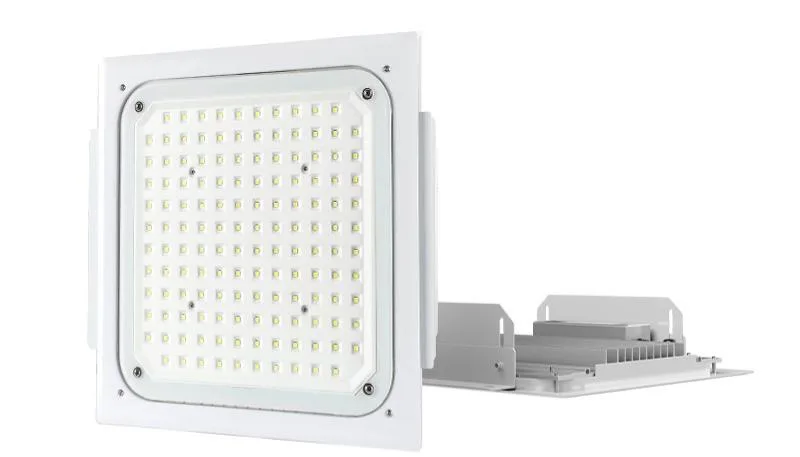
There are different types of led lights canopy, each with features that fit specific needs and places. Let’s look at the most common types of LED canopy lights and how they can help.
Surface-Mounted LED Canopy Lights
Surface-mounted LED canopy lights are a widely adopted solution for outdoor covered areas where reliability, uniform illumination, and fast installation are critical. These luminaires are mounted directly to flat canopy surfaces or overhead concrete and steel structures, typically via standard junction boxes or conduit entries, eliminating the need for recessed housings or complex suspension systems
Installation & Mechanical Design
Surface-mounted canopy lights are designed for direct mounting to junction boxes or solid surfaces, which significantly simplifies installation. Compared with recessed or pendant-mounted fixtures, surface mounting can reduce installation time by approximately 20–40%, particularly in retrofit projects where ceiling modification is not feasible. These lights are ideal for both outdoor lighting canopy applications and commercial canopy lighting fixtures, offering quick setup and long-lasting illumination.
Typical installation characteristics include:
Direct junction-box or conduit mounting
Compatible with concrete, steel, and metal canopy structures
Single-person installation in many cases, with average installation time ≤15 minutes per fixture
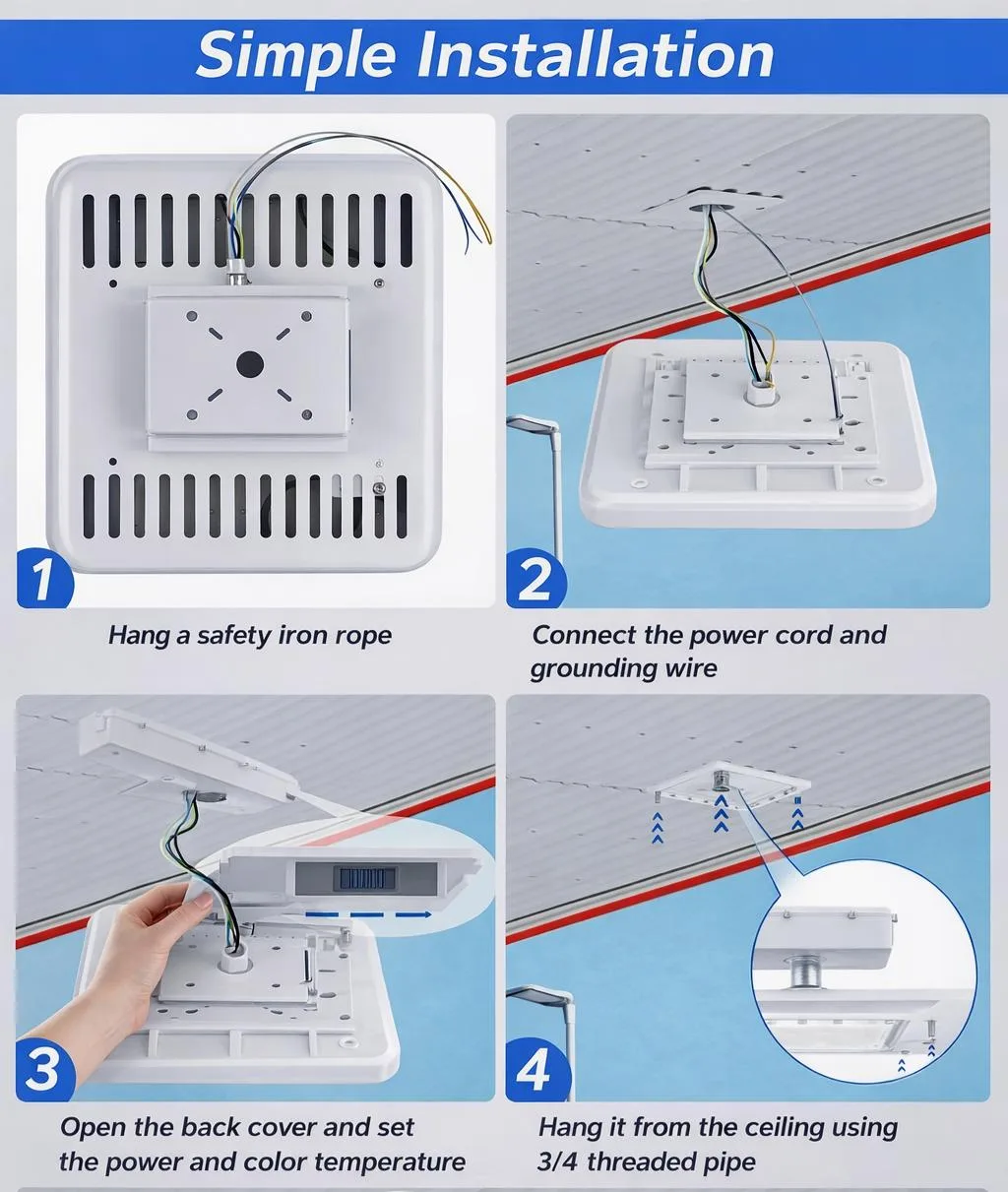
This makes surface-mounted canopy lights especially suitable for projects with tight construction schedules or limited site access.such as outdoor canopy lights, canopy lighting, or outdoor canopy with lights installations
Optical Performance & Illumination Quality
From an engineering perspective, performance is defined by measurable light output rather than subjective brightness. Commercial-grade surface-mounted LED canopy lights,including LED canopy lighting and outdoor canopy light options, typically deliver:
Luminous flux: 6,000–15,000 lm
System efficacy: 130–160 lm/W
Mounting height: 3–6 m
Achievable illuminance: 100–300 lux at ground level, depending on spacing and optics
These levels align with commonly referenced IES recommendations for fueling stations, parking structures, and pedestrian access areas. Proper optical distribution ensures uniform illumination, with typical average-to-minimum uniformity ratios of ≥0.4, minimizing shadows and glare in high-traffic environments.
Environmental Protection & Durability
Outdoor canopy applications demand resistance to weather, dust, and mechanical impact. Surface-mounted LED canopy lights are therefore engineered with robust protection characteristics, including:
Ingress protection: IP65 or IP66
Dust-tight enclosure
Protection against water jets from all directions
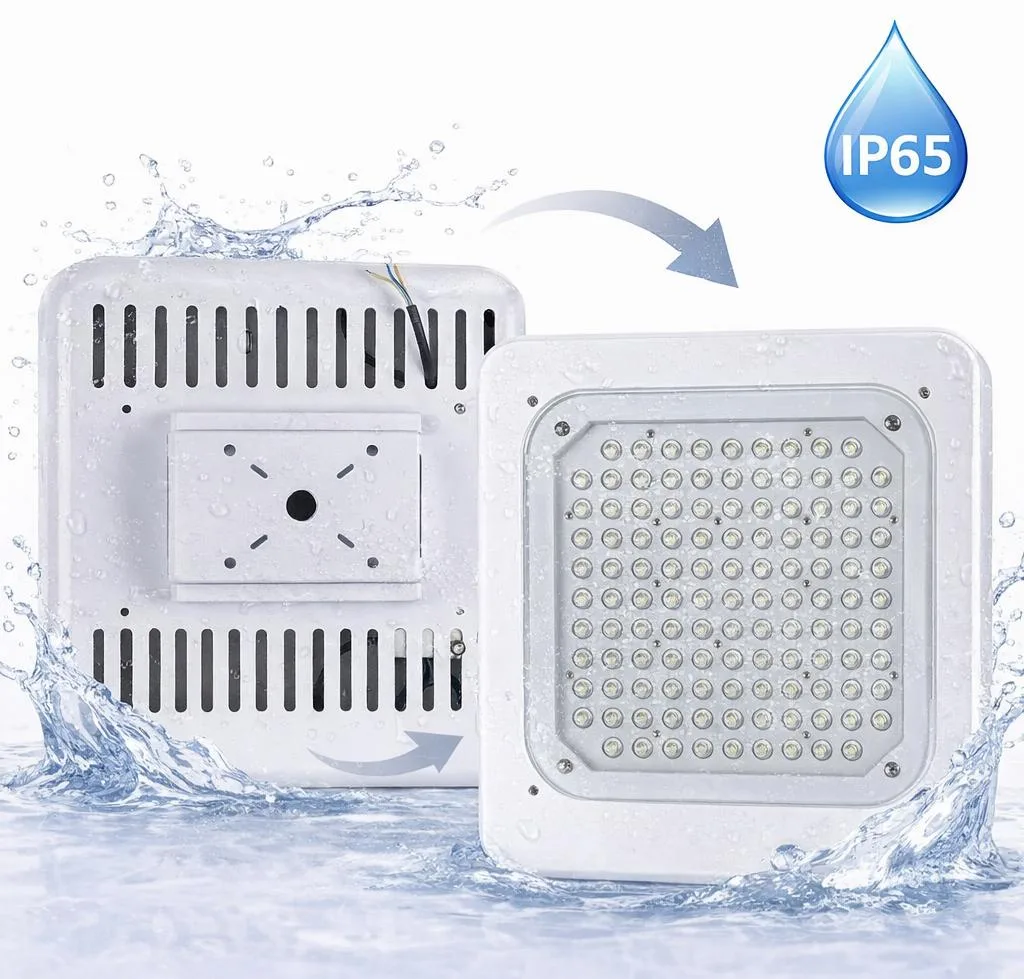
Optional impact resistance: IK08–IK10 (model dependent)
Operating temperature range: typically −30 °C to +50 °C
These specifications make the canopy fixtures suitable for long-term outdoor use under canopies exposed to rain, humidity, vehicle exhaust, and airborne contaminants.
Design Flexibility
Surface-mounted canopy lights are available in a range of form factors and housing designs, allowing architects and engineers to balance performance with visual integration. Square, rectangular, and round profiles are commonly offered, enabling consistency across different canopy styles while maintaining required lighting performance.
Typical Commercial Applications
Because of their measurable performance and installation efficiency, surface-mounted LED canopy lights are commonly specified in the following scenarios:
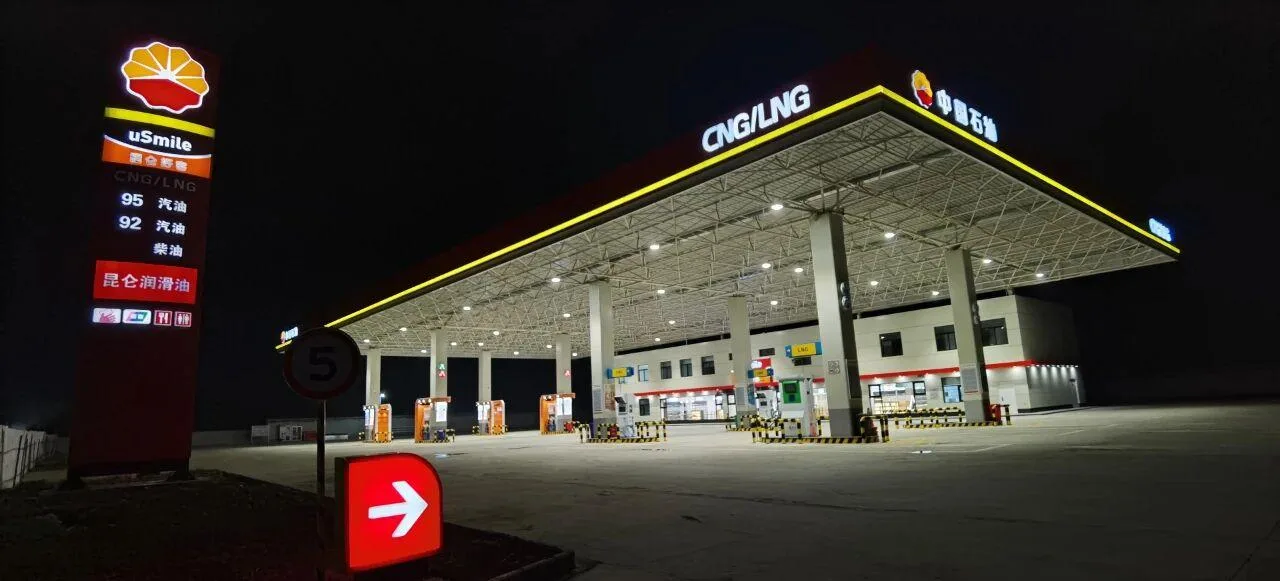
Gas stations
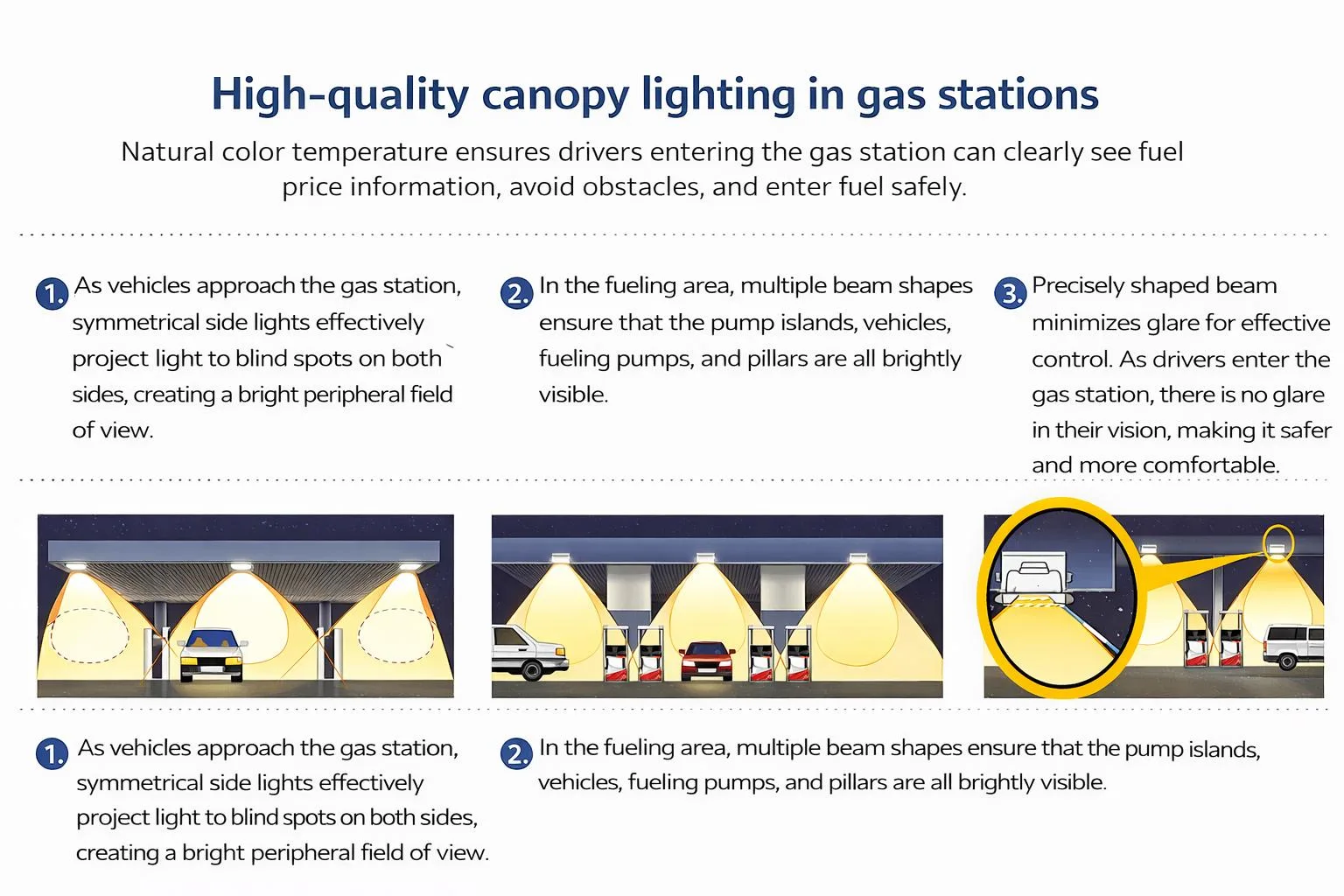
Provide bright, uniform illumination across fueling areas, improving driver visibility, safety, and camera performance during nighttime operation.Canopy lighting LED fixtures are ideal for these applications.
Parking garages
Deliver consistent lighting in large open areas, supporting wayfinding, security, and pedestrian safety while maintaining low energy consumption.Outdoor canopy lighting ensures optimal illumination for these spaces.
Building entrances and covered walkways
Ensure adequate vertical and horizontal illumination for access points, enhancing both safety and architectural appearance without excessive glare. Exterior canopy lighting is commonly used in these settings to achieve balanced lighting without shadows.
Typical Technical Specifications (Reference Range)
| Parameter | Typical Range |
| Power | 40W / 60W / 80W / 100W |
| Luminous Flux | 6,000–15,000 lm |
| Efficacy | 130–160 lm/W |
| Input Voltage | AC100–277V |
| CCT Options | 3000K / 4000K / 5000K |
| IP Rating | IP65 / IP66 |
| IK Rating | IK08 / IK10 (optional) |
| Driver | Commercial-grade constant-current |
| Warranty | 5 years |
Recessed led canopy lights
Unlike surface-mounted fixtures, recessed LED canopy lights are installed within a dedicated ceiling or canopy cutout, allowing the luminaire to sit flush or near-flush with the finished surface. Typical designs specify a defined cutout size, embed depth, and trim width, which visually minimizes the fixture profile and creates a clean, architectural appearance when viewed from below.
By integrating the housing into the structure, recessed canopy lights reduce visual clutter and are commonly selected for projects that prioritize a low-profile, minimalistic ceiling plane rather than exposed luminaires. LED canopy light fixtures or commercial canopy light fixtures are often chosen for their sleek, unobtrusive look.Installation drawings and cross-section diagrams (recessed with trim or trimless configurations) are typically used to verify alignment, embed depth, and finish integration.
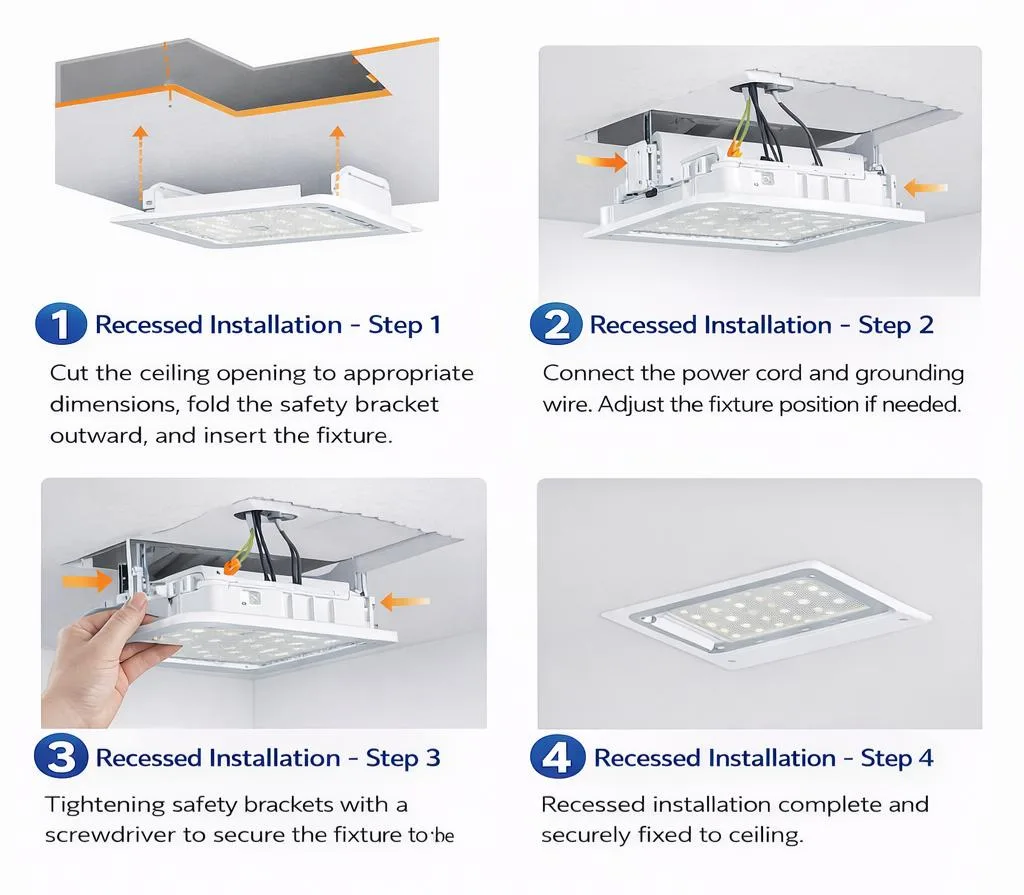
Key Features (Engineering-Oriented)
Low-profile recessed installation
Defined cutout dimensions and embed depth allow the fixture to remain visually unobtrusive while maintaining structural and thermal integrity. especially in outdoor light canopy applications. Canopy LED lighting solutions can provide a sleek and modern look while ensuring durability.
Controlled ambient illumination
Optical designs often incorporate deeper light chambers, defined beam distributions, and glare-control elements. Performance can be verified through IES/LDT photometric files, polar curves, and high-angle candela limits to support applications requiring comfortable ambient lighting without excessive brightness or glare.This ensures that lights for outdoor canopy applications create the right ambiance, especially when lights for a canopy are required.
Uniform light distribution over large areas
When properly spaced and mounted at recommended heights, recessed canopy lights can deliver consistent illuminance. Uniformity performance should be validated using Dialux or AGi32 isolux calculations, reporting average illuminance and uniformity ratios (e.g., Avg/Min), supported by LM-79 tested system lumen output.
Application-ready durability and electrical quality
For semi-outdoor or under-canopy environments, typical specifications include IP-rated enclosures, optional IK impact resistance, stable operation across defined temperature ranges, and electrical parameters such as input voltage range, power factor, and THD.
Best Use Cases (With Practical Criteria)
Retail and commercial interiors
Shopping malls, lobbies, and restaurant patios benefit from recessed canopy lighting where ceiling appearance, visual comfort, and uniform ambient illumination are equally important. Canopy lighting fixtures, such as LED light canopy options, can be used to target specific illuminance levels. These levels and spacing should be defined according to local lighting standards and project requirements to provide lights for canopy applications.
Building exteriors and under-canopy areas
Recessed LED canopy lights are widely used for under-canopy architectural lighting, providing clean visual lines while maintaining adequate brightness and durability. In these applications, environmental ratings (e.g., IP65 or higher), impact resistance, and photometric coverage should be confirmed during fixture selection.
LED Flood Canopy Lights
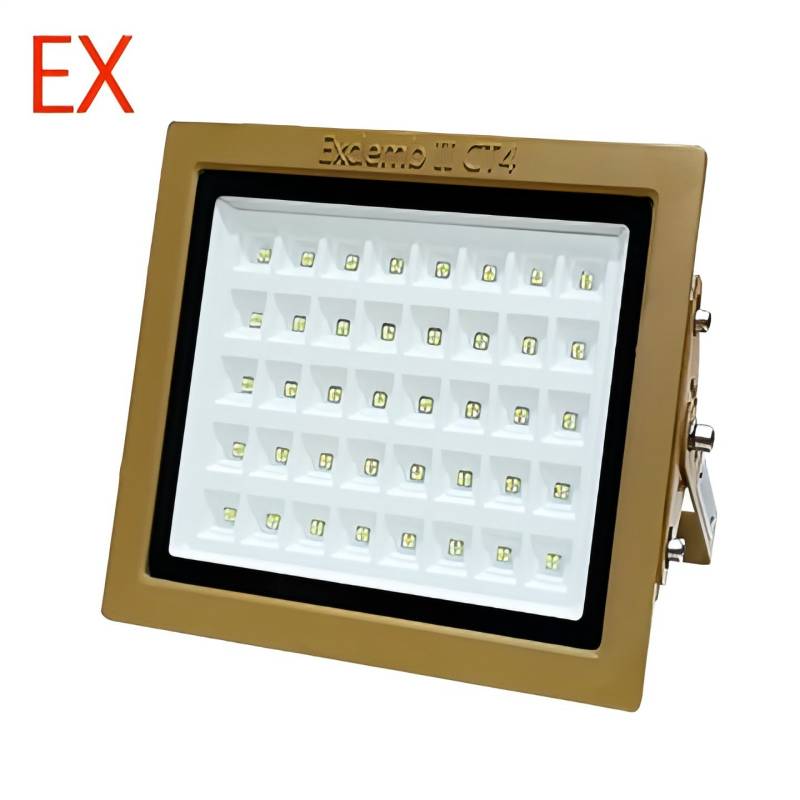
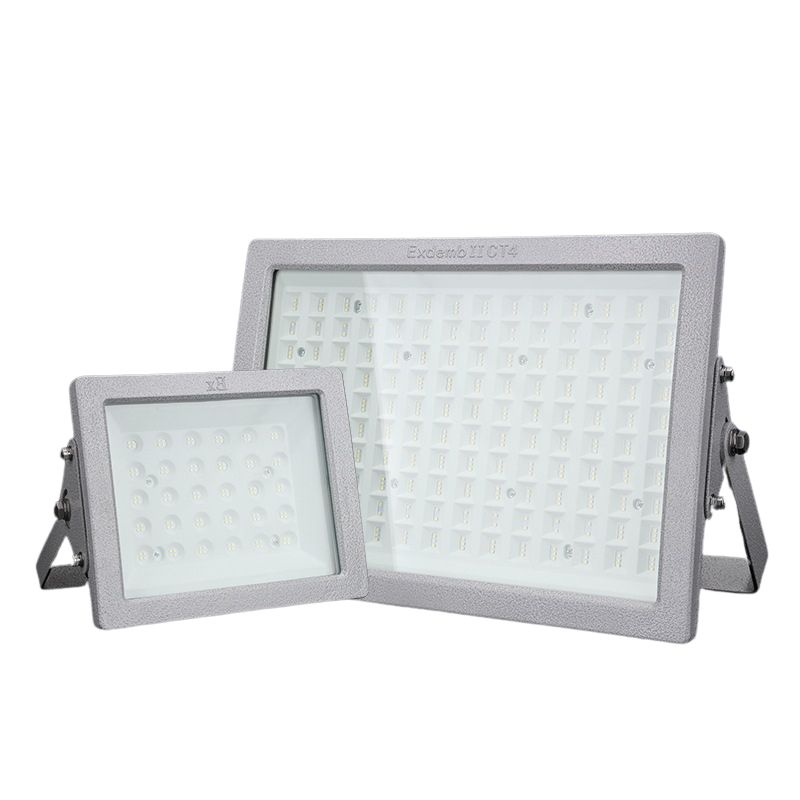
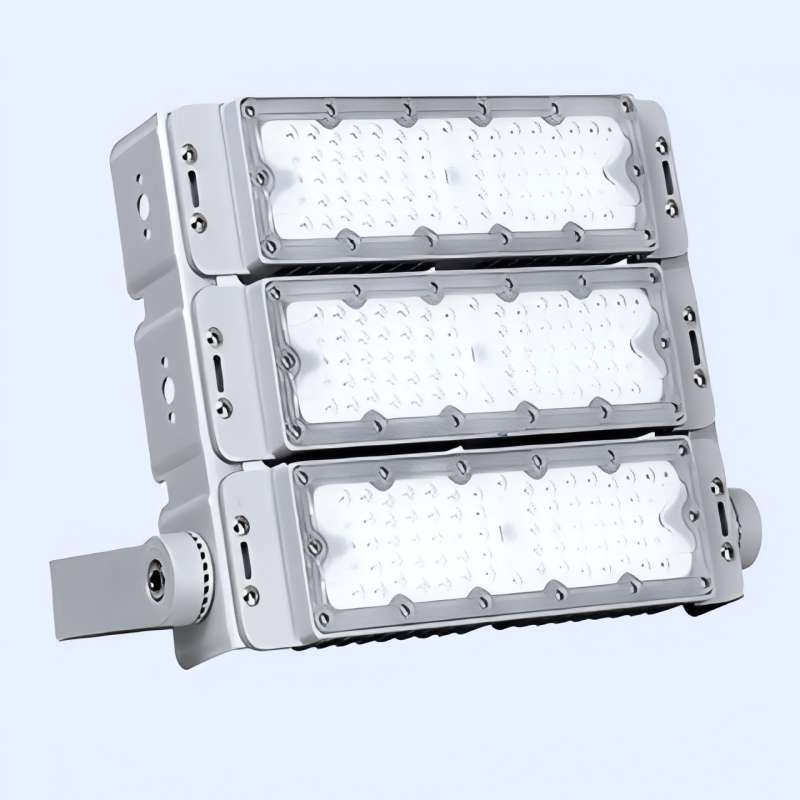
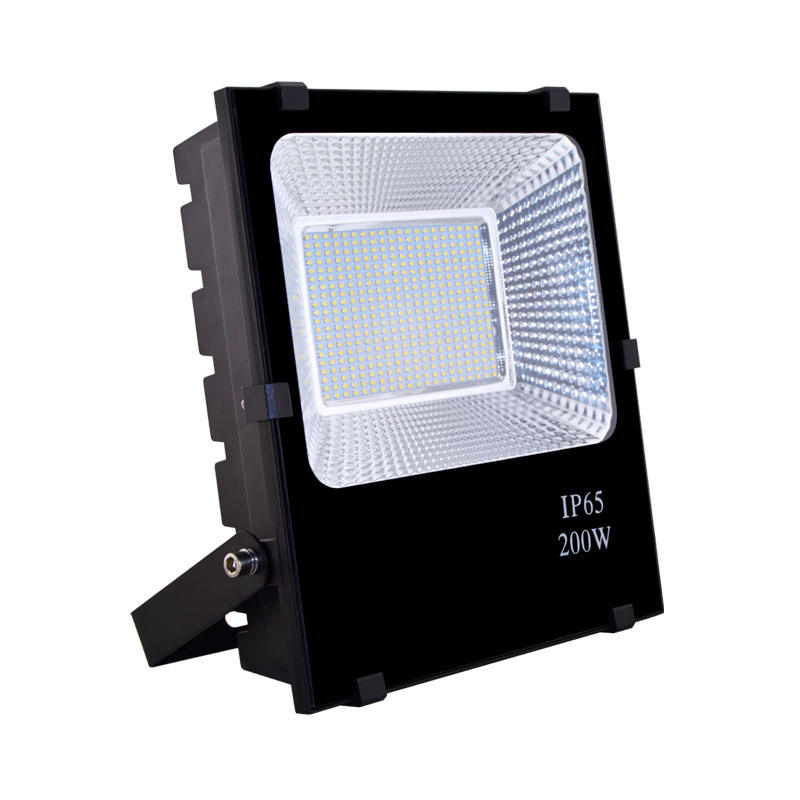
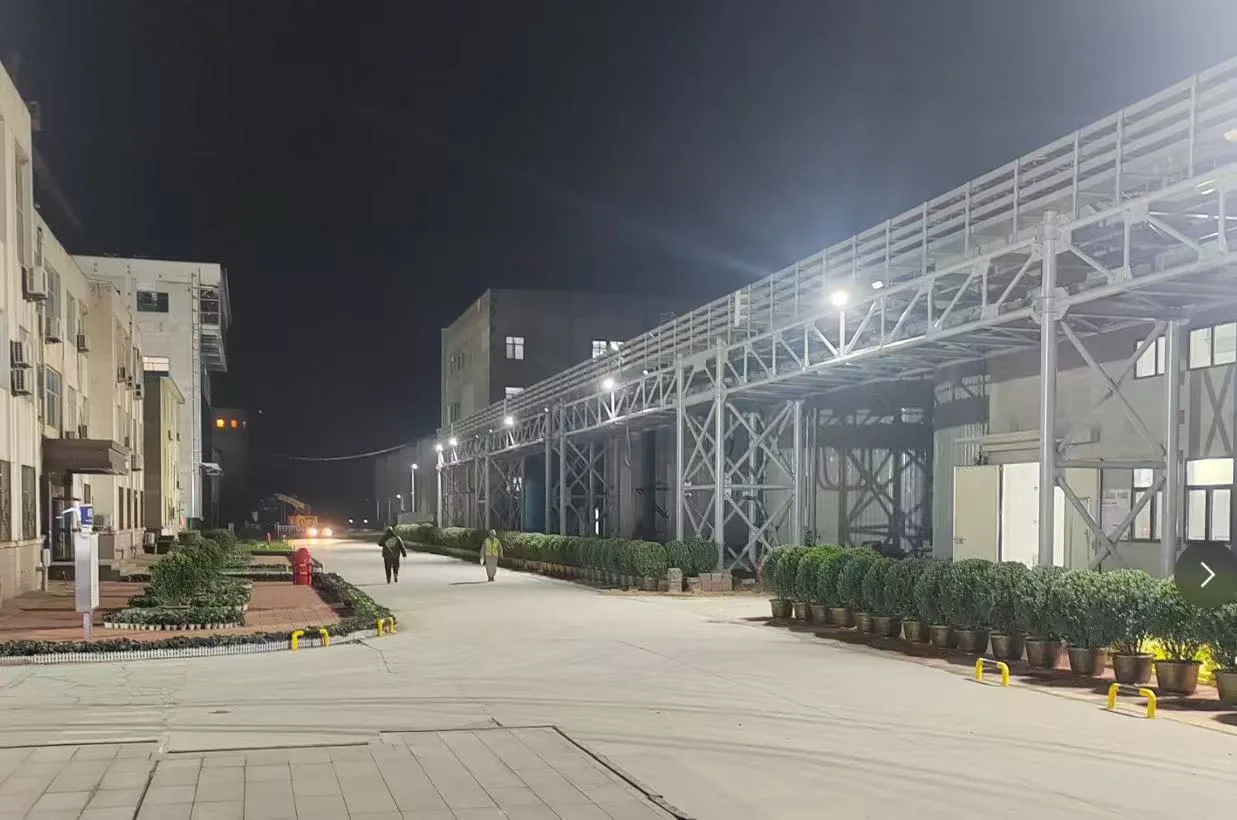
LED flood canopy lights are engineered luminaires designed for highintensity, largearea illumination in commercial and industrial environments. With lightweight yet durable housings and customizable optics, these canopy light fixtures are ideal for facilities with demanding visibility and safety requirements.
High lumen output & optical control: Modern LED flood canopy lights deliver 12,000–45,000 lumens per fixture, with luminous efficacies up to 165 lm/W. Optics are configurable with 60°, 90°, or 120° beam angles and asymmetric distributions, enabling precise design of uniform illumination patterns in spaces ranging from parking lots to sports courts.
Multiple mounting options: These luminaires support pole mounting, surface mounting, and trunnion/yoke brackets. Recommended mounting heights are typically 4–8 m for parking structures and up to 12 m for large outdoor facilities, with spacing ratios determined by photometric planning to ensure target average illuminance and uniformity.
Rugged protection & environmental rating: Designed for harsh outdoor use, typical products are rated IP65/IP66 against dust and water ingress and IK08 for mechanical impact resistance. Operating temperatures usually span –30 °C to 50 °C, suitable for varied climate conditions
Electric & optical performance: Integrated constantcurrent drivers provide power factor > 0.9, THD < 20%, and options for dimming / 0–10V / DALI control. CCT options of 4000K and 5000K with CRI ≥80 ensure appropriate color rendering for security and operational tasks.
Key commercial applications:
Large parking lots: Achieve targeted average illuminances (e.g., ≥20–30 lux) with uniformity (Uo ≥ 0.4) compliant with IES recommendations.
Sports & recreation areas: Deliver consistent field illumination with minimal glare and spill light.
Warehouses & loading zones: Ensure operator safety and visibility for night operations.
Smart LED Canopy Lights
With the rise of smart technologies in lighting, smart LED canopy lights have become an advanced solution for outdoor lighting needs, integrating features such as motion sensors, dimming, and remote control options. These intelligent lighting systems offer the ability to adjust brightness, optimize energy usage, and integrate with other smart systems for enhanced functionality and efficiency.
Key Features:
Motion Sensor Capabilities
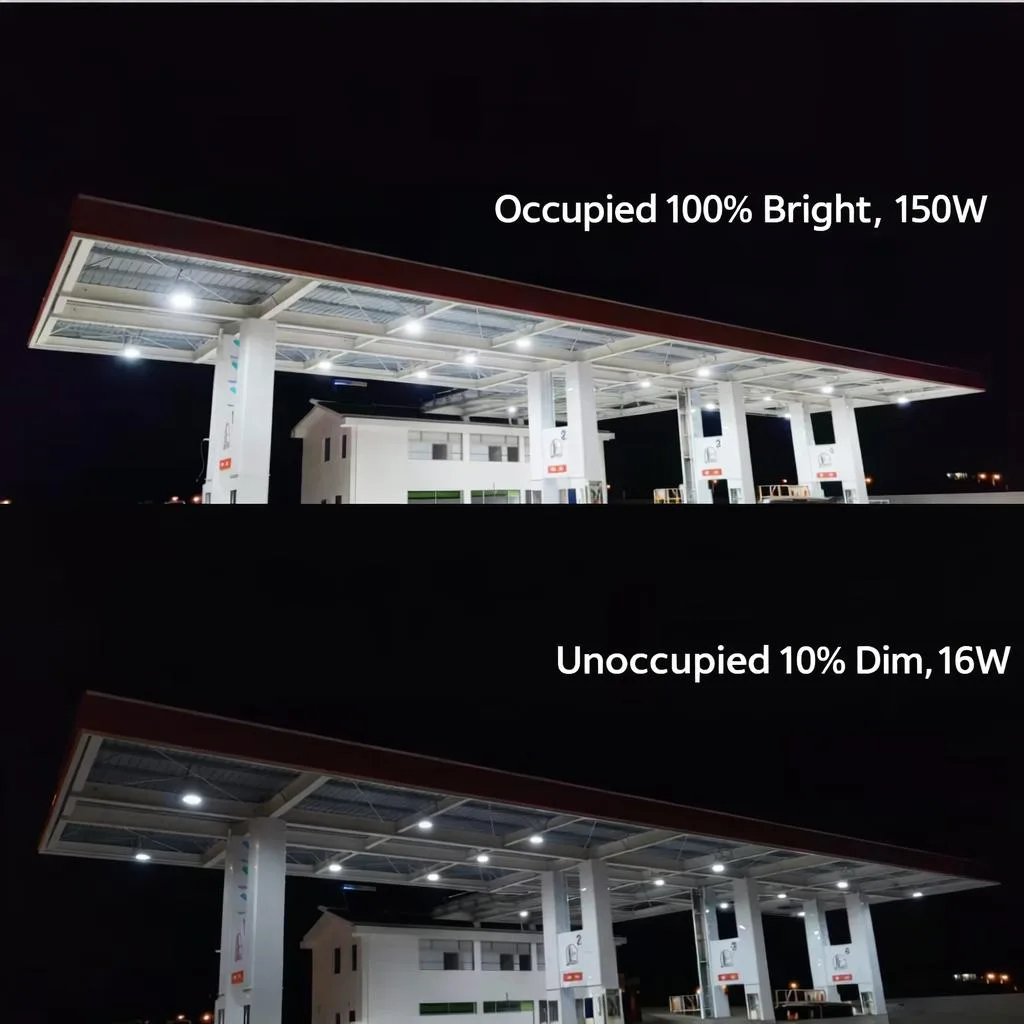
Smart LED canopy lights feature integrated motion sensors that ensure lighting is activated only when necessary, significantly reducing energy consumption. Verified by testing, these sensors can cover detection areas of up to 50 m², ensuring efficiency.
Dimming Features
These lights offer adjustable brightness, utilizing 0-10V dimming or DALI control, enabling them to adapt to changing lighting needs throughout the day. Dimming functionality can be controlled manually or automatically, ensuring optimal lighting at all times.
Remote Control and Smartphone Integration
These fixtures support seamless operation through smartphone integration, enabling easy remote management via apps or voice assistants like Alexa and Google Home. The system’s response time is typically under 1 seconds, ensuring minimal lag in control.
Smart System Connectivity
Our smart LED canopy lights are compatible with other smart systems such as security cameras and building management systems, allowing for integrated lighting management and energy optimization. This enables automatic adjustments based on real-time data from connected systems.
Best Use Cases:
Gas Stations
Equipped with motion sensors, these lights can activate when a customer is present, reducing unnecessary energy use and maintaining consistent security lighting. Energy savings can reach up to70% compared to constant-on fixtures.
Commercial Properties
Perfect for businesses looking to integrate energy-saving lighting solutions into their outdoor spaces, offering both environmental benefits and cost efficiency. Integration with smart building management systems can optimize both lighting and other utilities.
Parking Garages
Smart lighting systems ensure that only occupied areas are illuminated, which greatly reduces electricity consumption while maintaining safety and security standards.
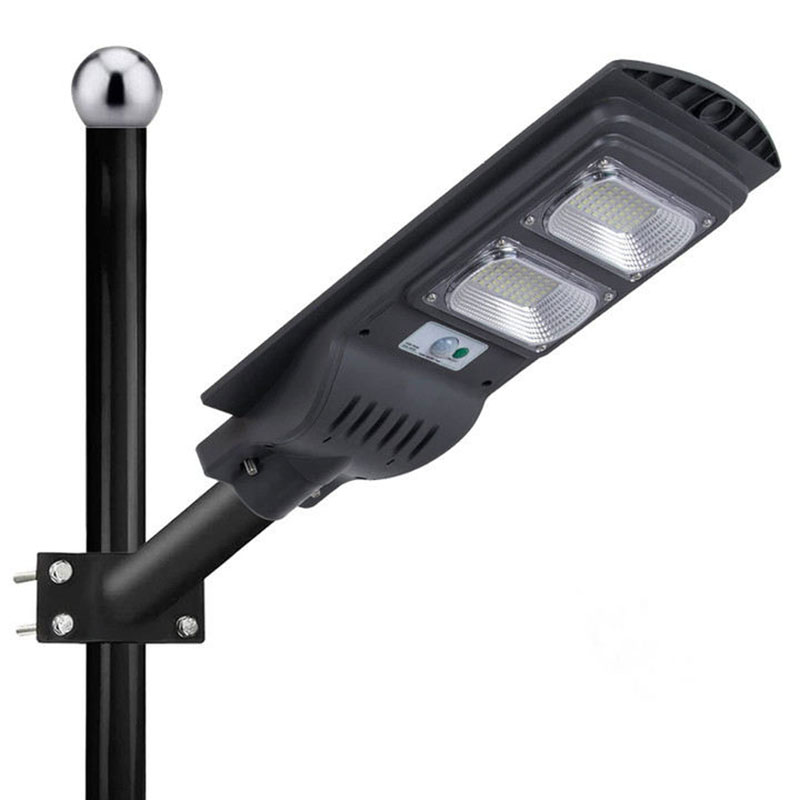
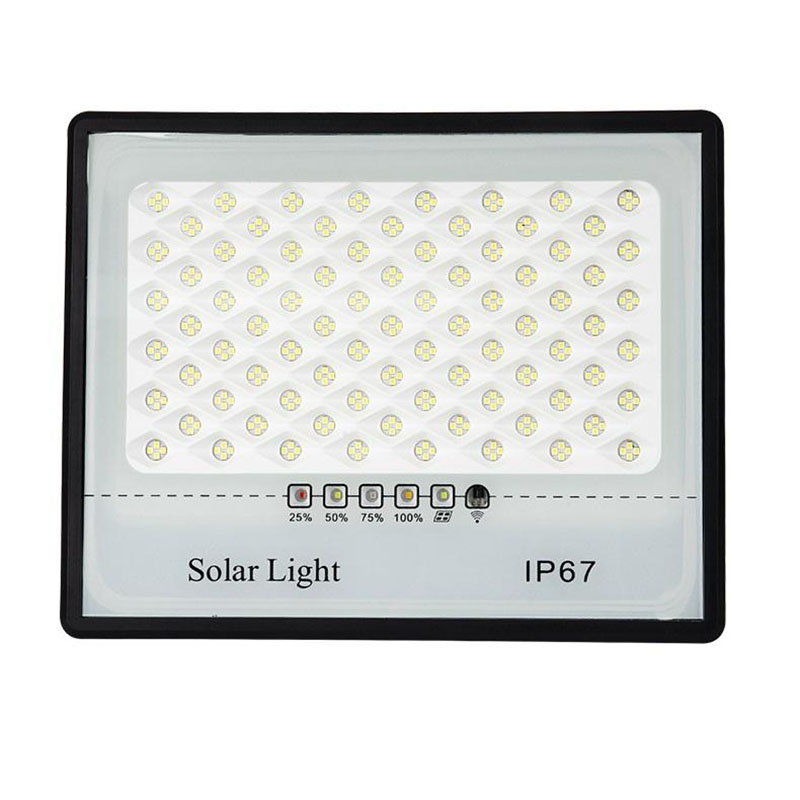
5. Solar LED Canopy Lights
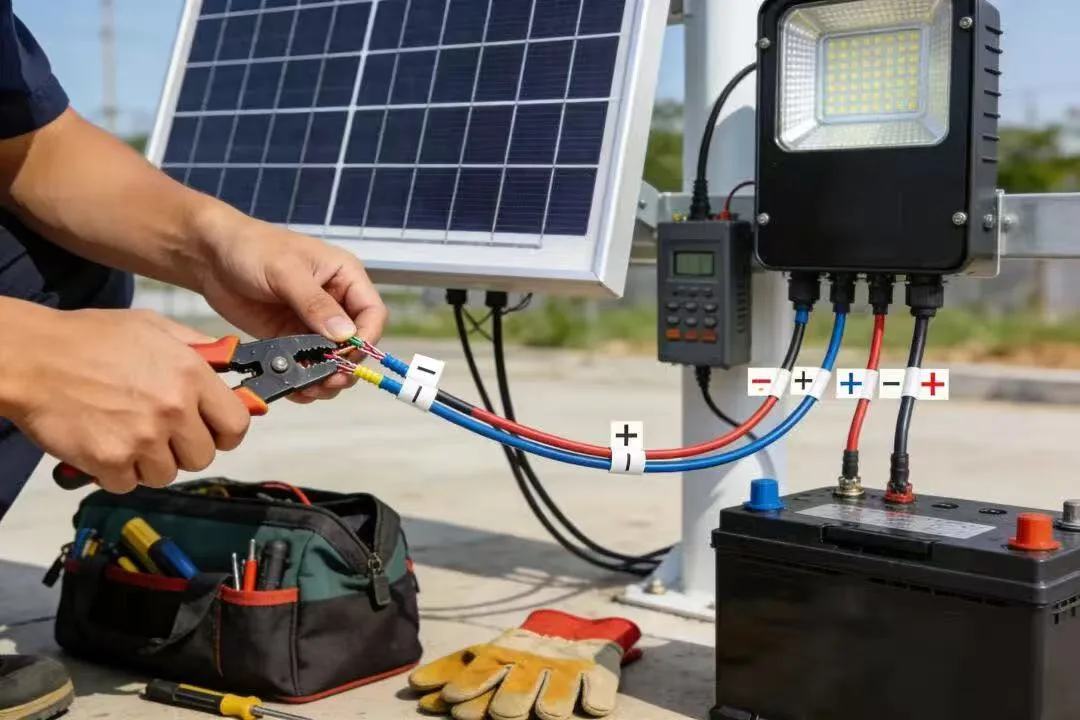
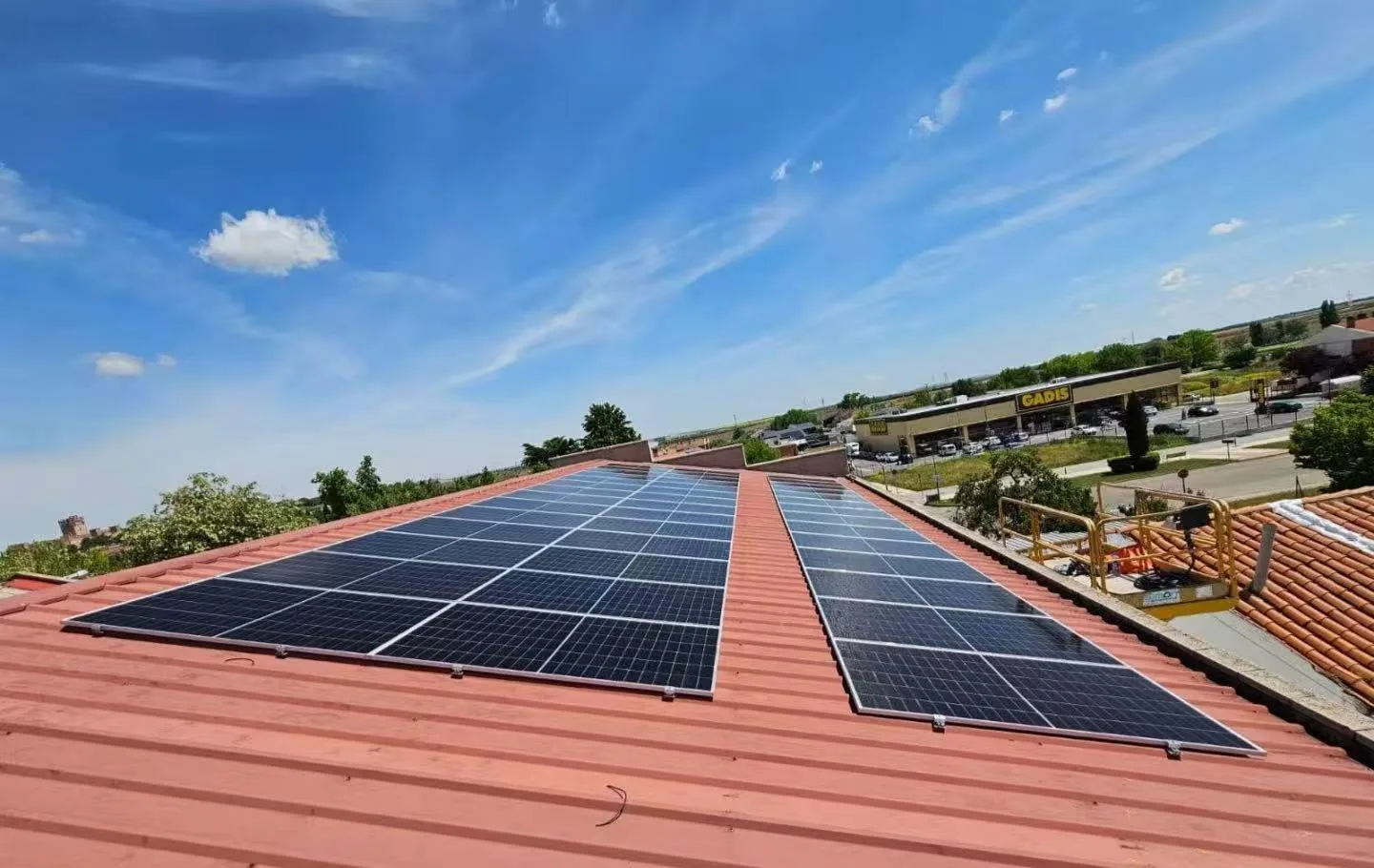
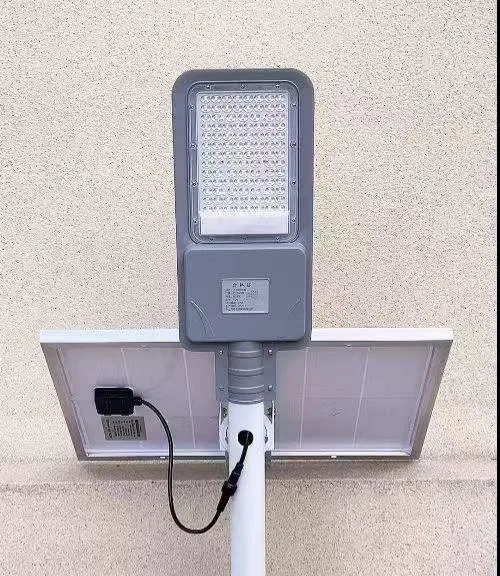
As businesses become more conscious of their environmental impact, solar LED canopy lights offer a sustainable and energy-efficient alternative to traditional electric-powered lights. These lights use solar panels to harness sunlight and convert it into electrical energy to power the LED fixtures.
Key Features:
Eco-friendly: Solar lights reduce reliance on the grid, cutting down on energy costs and carbon footprints.
No wiring required: Ideal for installations in remote or off-grid areas where electricity is not readily available.
Autonomous operation: Solar-powered lights are self-sufficient and require minimal maintenance.
Best Use Cases:
Remote locations: Solar LED canopy lights are perfect for lighting areas that lack easy access to electrical grids, such as campgrounds or rural gas stations.
Outdoor venues: Ideal for outdoor events, festivals, or venues where temporary lighting is required.
Sustainability-focused businesses: Companies that prioritize green initiatives can benefit from incorporating solar-powered lighting into their outdoor spaces.
How to Choose the Right LED Canopy Light (H3)
When selecting an LED canopy light, there are several factors to consider to ensure that you choose the right fixture for your needs. Here are some key considerations:
Application: What is the primary purpose of the lighting? Is it for safety, visibility, ambiance, or aesthetics?
Brightness and Coverage Area: Consider the lumens output needed for adequate illumination. Larger spaces may require higher wattage and broader beam angles.
Weather Resistance: Ensure that the light has an appropriate IP rating (e.g., IP65 or higher) to withstand exposure to weather elements.
Energy Efficiency: Look for energy-efficient LEDs that provide long-term savings.
Durability: Ensure that the canopy light is built to last in tough conditions, particularly for outdoor applications exposed to the elements.
Conclusion: Why LED Canopy Lights Are the Best Choice for Outdoor and Commercial Lighting
LED canopy lights are the optimal choice for lighting outdoor commercial spaces due to their energy efficiency, long lifespan, and cost-saving benefits. Whether you’re lighting up a gas station, a parking garage, or the exterior of a building, choosing the right LED canopy light can make a significant difference in both the safety and aesthetics of your property.
As technology continues to advance, options like solar-powered and smart LED canopy lights are becoming increasingly popular, offering both sustainability and convenience. By carefully selecting the right type of canopy light for your space and needs, you can enhance the functionality, security, and visual appeal of your outdoor areas while reducing your overall energy consumption.
This article provides a comprehensive guide to understanding the different types of LED canopy lights, how they can be used in outdoor commercial spaces, and how to choose the best solution for your business. Integrating energy-efficient lighting is not just about saving on electricity bills, but also contributing to a more sustainable future.