Skip to content
Modern cities depend on outdoor lighting for safety, visibility, and transportation. However, when lighting is poorly aimed, overly bright, or lacks optical control, it can create light pollution city problems, affecting ecosystems, human health, sky quality, and energy use.
This engineering guide explains the causes of city light pollution,how to reduce light pollution, and how proper optical and luminance design helps cities meet global standards and sustainability goals. Designed for municipal planners, lighting engineers, EPC contractors, and OEM/ODM partners, it offers clear technical guidance supported by real-world street-lighting practices.
What Lighting Pollution Is and Why It Matters
Lighting pollution occurs when outdoor lighting produces unnecessary, misdirected, or excessive illumination. In street lighting design, the four forms defined by CIE 150:2017 are:
Sky-Glow — Upward light brightens the night sky
Sky-glow happens when street light emit light above the horizontal plane. The World Atlas of Artificial Night Sky Brightness (Falchi et al., 2016) shows that poor optical control increases sky-glow by 100–1,000%, reducing star visibility and disrupting nocturnal wildlife.
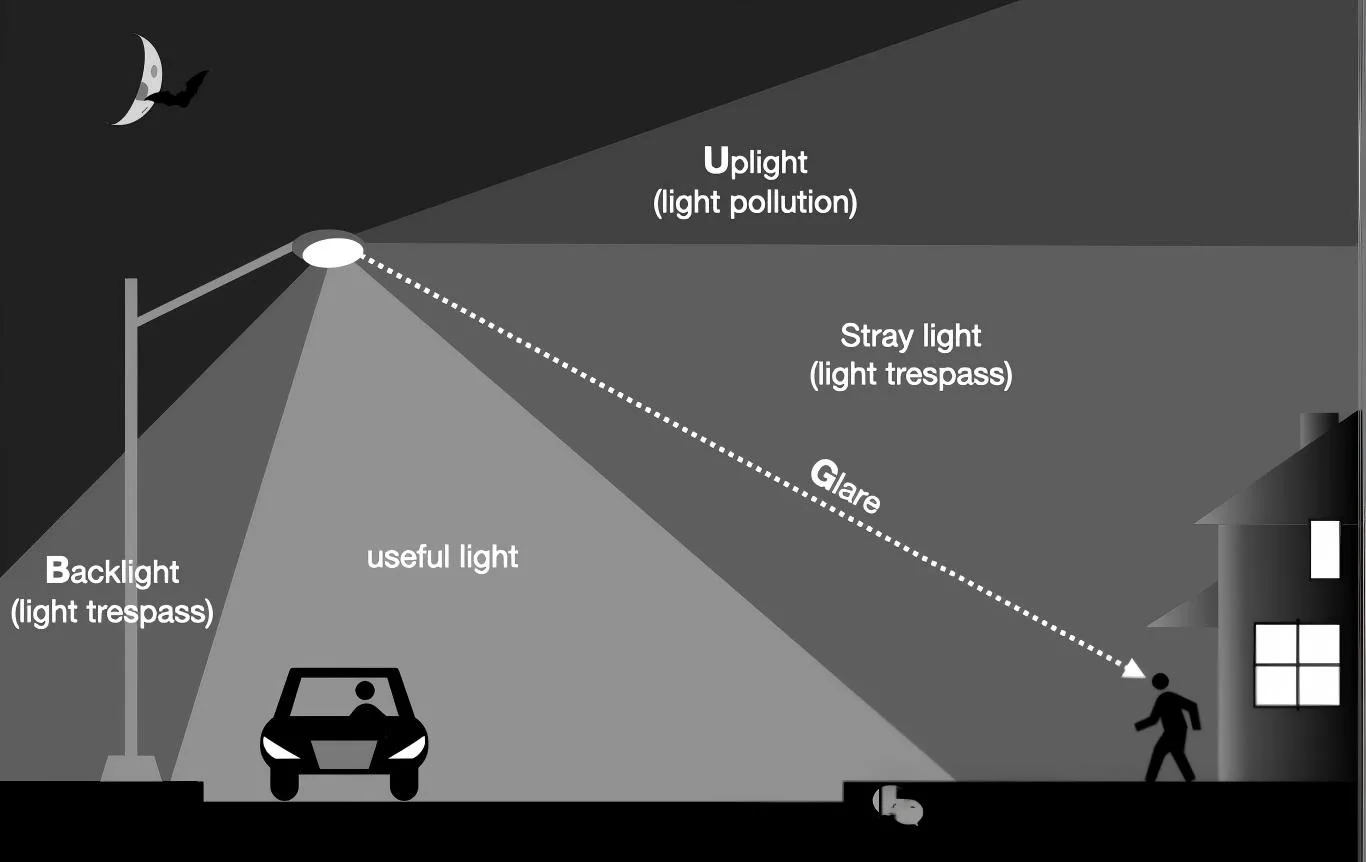
Glare — light pollution glare reduces visual comfort and safety
Glare occurs when excessive luminance strikes the eye directly. EN 13201 and IES RP-8 use TI and GR metrics to measure glare. High-CCT, high-intensity LEDs increase visual strain and impair night-driving safety.
Light Trespass — Spill light entering unwanted areas
CIE 150 recommends 1–5 lux limits on residential façades to prevent sleep disruption and complaints.Without proper street light shielding, Unshielded or improperly aimed street lights cause light trespass into homes and other sensitive areas.
Why Lighting Pollution Matters
Human Health
AMA and WHO report that high-CCT night time street lights disrupts circadian rhythm and suppresses melatonin, leading to poor sleep, fatigue, and long-term health effects.
Wildlife
Studies from the Ecological Society of America and Royal Society Biology Letters show that artificial lamp disrupts migration, reduces insect populations, and affects nocturnal feeding and breeding patterns.
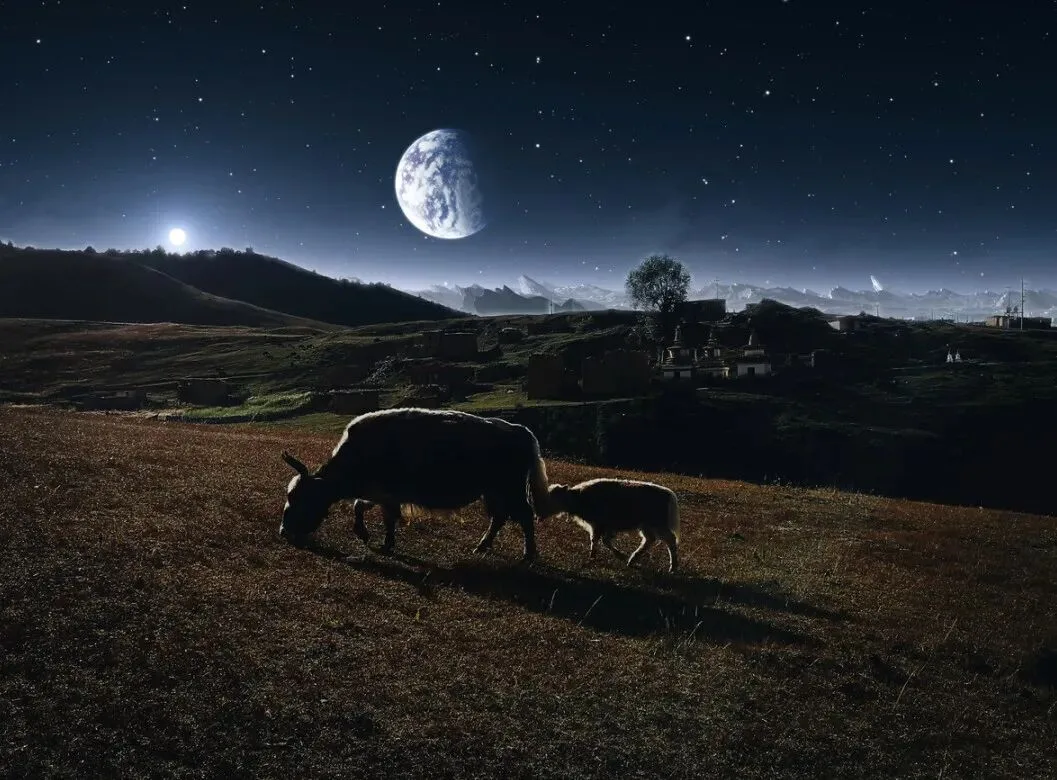
Astronomy & Sky Quality
The World Atlas of Night Sky Brightness shows urban sky brightness has risen 100–1,000%, limiting star visibility for one-third of the global population and interfering with astronomical research.
Energy & Carbon Impact
IEA reports that more than 30% of outdoor lighting energy is wasted due to over-illumination and poor control, increasing OPEX and carbon emissions even in LED-equipped cities.
Urban Comfort
CIE 150 states that glare and trespass reduce visual comfort. Excessive luminance and poorly aimed contemporary street lights cause sleep disturbance and are major sources of public complaints.
Over-Illumination — Light levels exceed actual needs
IES RP-8 and IEA research show that over-lighting increases glare, sky-glow, and energy waste. IEA estimates more than 30% of outdoor lighting energy is wasted globally due to excessive brightness and poor optical distribution.
Why LED Street Lights Can Either Reduce or Increase Light Pollution
LED streets lights are more efficient and easier to control than old HID lamps, but they do not automatically reduce light pollution. Research from CIE 150, EN 13201, and the International Dark-Sky Association shows that light pollution street lights only improve when LEDs are designed and installed with proper optical control.
LEDs can reduce light pollution when:
Beam distribution is controlled using roadway optics (CIE-defined cut-off patterns) to keep light on the pavement.
Color temperature (CCT) is kept at 3000K–4000K, as recommended by the AMA and IDA, to reduce blue-light scatter.
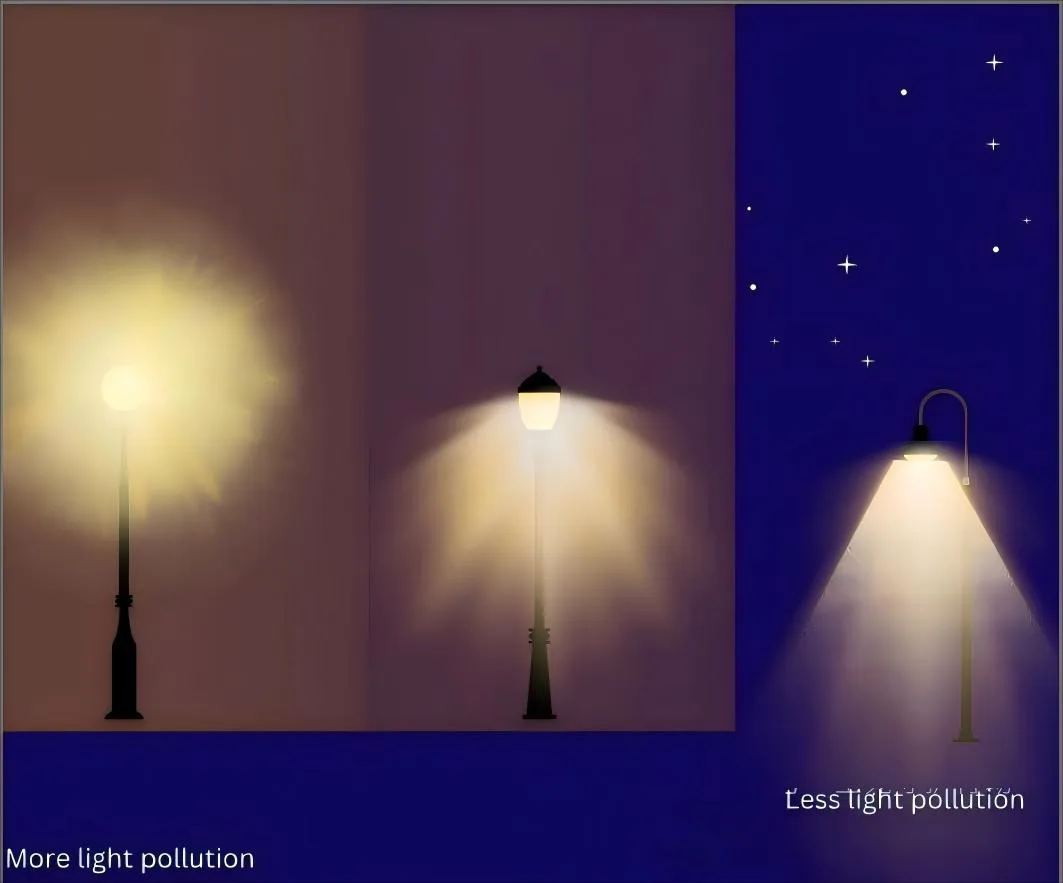
Upward light is minimized, keeping the Upward Light Ratio (ULR) as close to 0% as possible (per CIE 150).
Smart controls—dimming, time-based profiles, or sensors—prevent over-lighting and reduce unused nighttime brightness.
Modern street lamp support these goals because they offer:
Directional light, unlike HID lamps that emit 360° and require large reflectors.
Precise optical lenses that confine light to roadways and avoid spill light into windows.
Programmable lumen output using smart drivers
Automatic dimming based on schedules or motion sensors.
Lower initial lumen levels than HID to achieve the same road visibility, thanks to better uniformity and S/P ratio performance.
However, studies from CIE and the AMA warn that poorly engineered LEDs—especially those with wide beam angles, high CCT, or leakage above the horizontal plane—can create more glare and more sky-glow than HID lamps.
In short, the optical design—not the LED chip—is what determines whether LED street lighting helps or harms the night environment.
Engineering Principles for Street Light Design: How to Solve Light Pollution
Optical Control & Beam Distribution
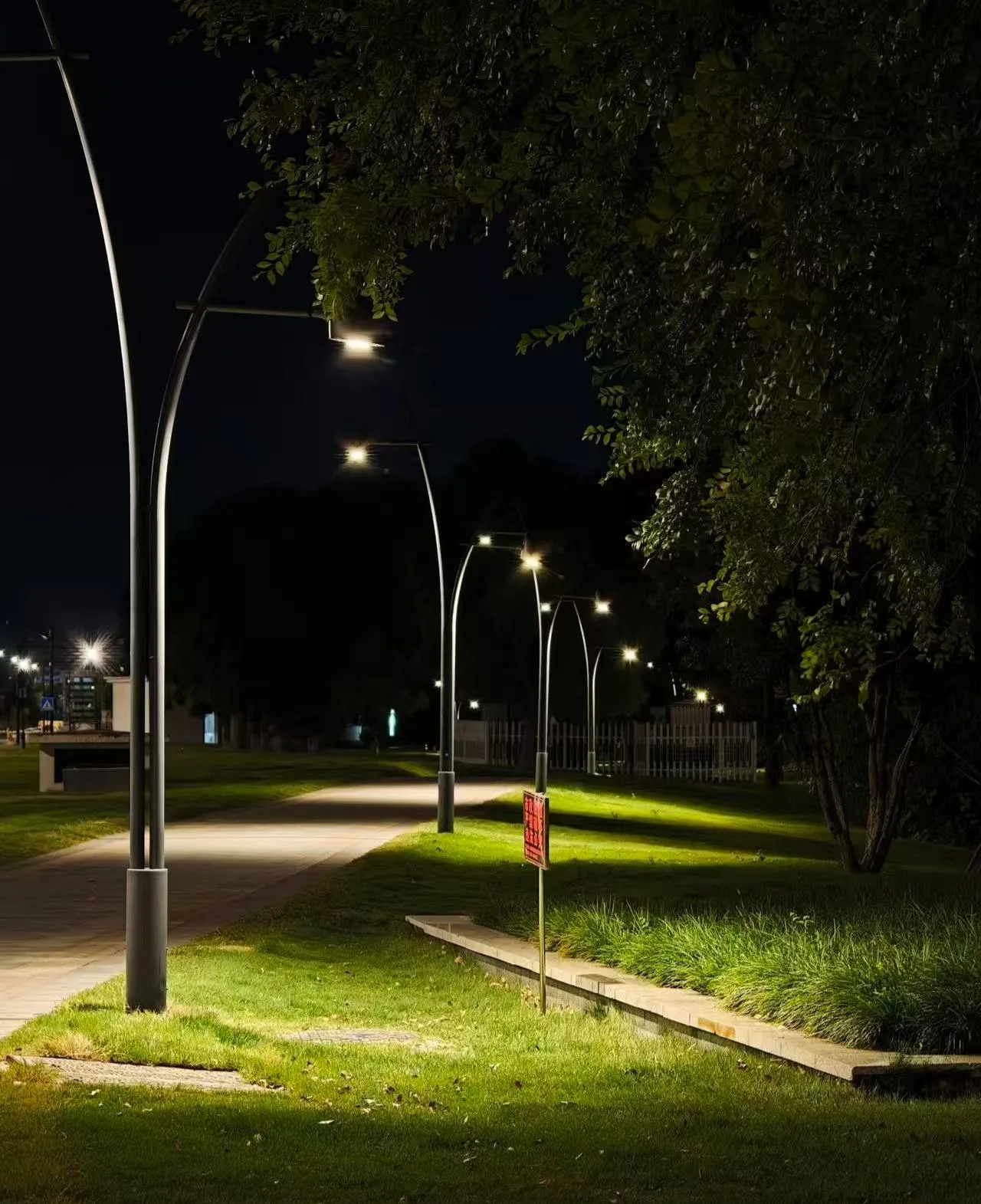
Dark sky compliant street lights reduce light pollution when their optical design follows international standards.
According to CIE 150:2017 and IES RP-8, the most effective systems use full cutoff optics (0% uplight) to eliminate sky-glow. Roadway distributions such as Type II, III, IV, and V help match the light pattern to the street shape, lowering spill light and improving uniformity. street light covers or visors—defined in EN 13201-2 for glare control—are used to reduce horizontal glare for drivers and pedestrians.
Many professional systems also include narrow-beam pedestrian or pathway optics, as seen in Philips LEDGINE and Cree RSW photometric files.
With proper optical control, light stays on the roadway—not in windows, and not in the sky.
Color Temperature & Blue-Light Reduction
Blue-rich street lamp light scatters more in the atmosphere, increasing sky-glow through Rayleigh scattering. This effect is documented by the International Dark-Sky Association (IDA) and the World Atlas of Artificial Night Sky Brightness. High blue content also affects wildlife and human sleep cycles, as shown in studies from the AMA and Royal Society Biology Letters.
To reduce these impacts, many cities now use lower CCT levels:
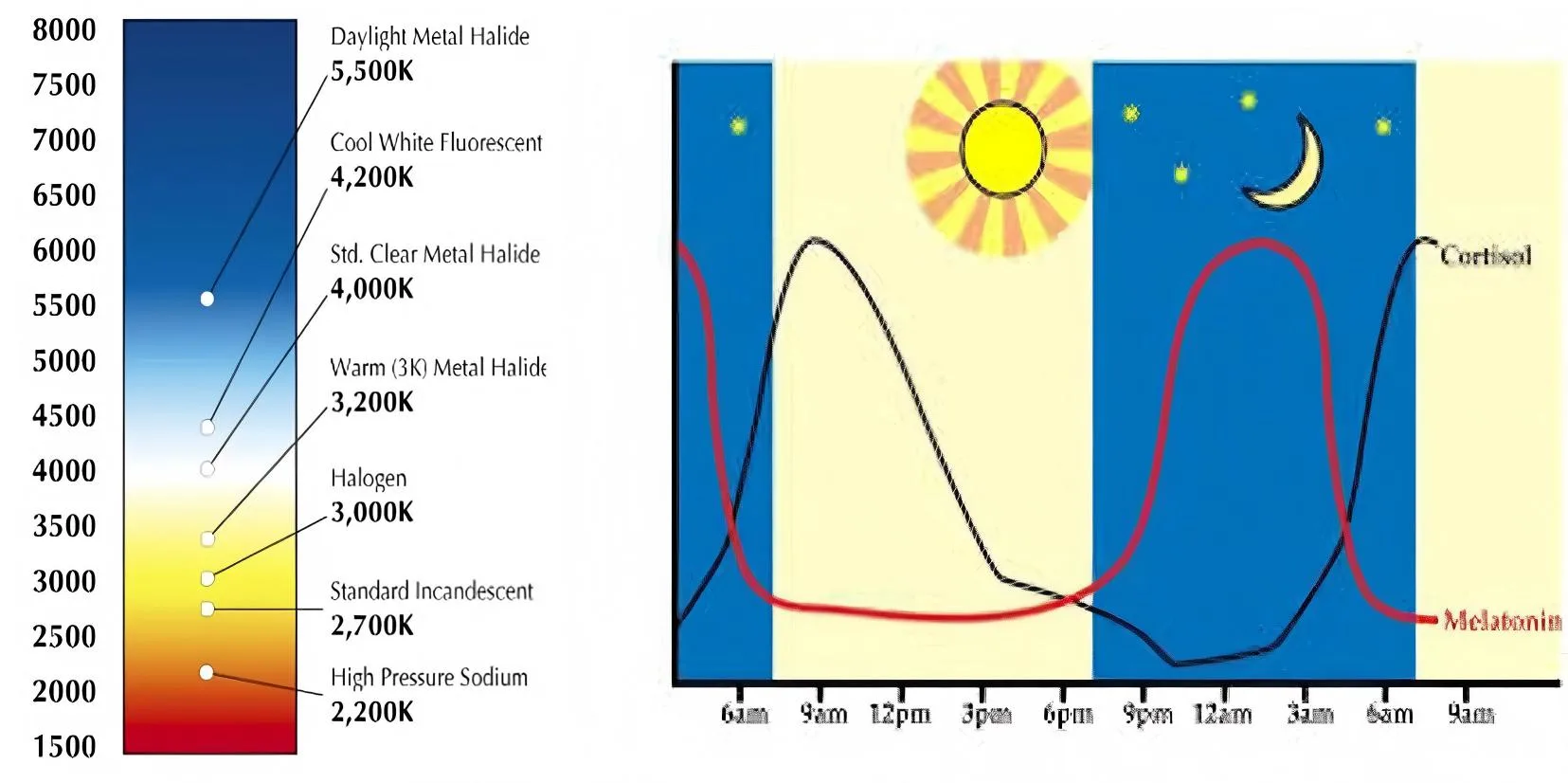
1800–2200K — nature reserves, parks, ecological zones
2700–3000K — residential neighborhoods
3000–4000K — major roads and commercial districts
Lower CCT lighting has been shown to cut sky-glow significantly while maintaining safe visibility.
Mounting Height, Angle & Pole Spacing
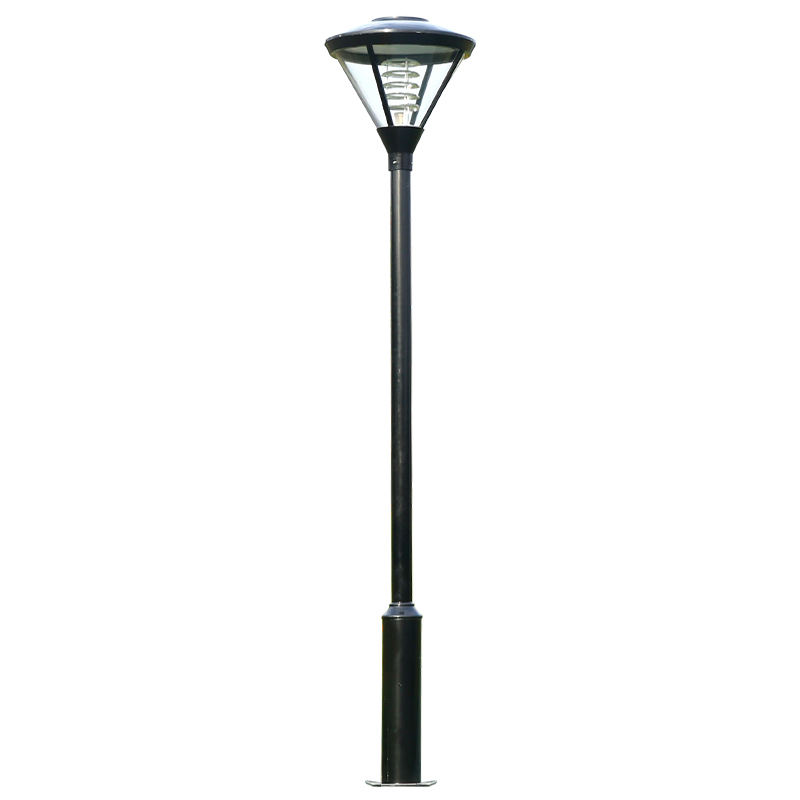
Incorrect installation is a major source of glare, light trespass, and upward leakage.—key contributors to glare light pollution.Standards such as EN 13201-5 and IES RP-8 recommend matching street light pole design and pole height to roadway width using the 0.7–1× rule, ensuring uniform coverage without over-lighting. The tilt angle should remain at 0°, as required by CIE 150, to prevent uplight and glare.Designers should avoid placing poles close to reflective surfaces like glass facades or balconies, which can bounce light into unintended areas.
Consistent spacing and overlapping beam patterns help maintain uniformity and eliminate dark spots—and even small aiming errors can create major pollution problems.
Lumen Output & Over-Illumination Control
Many cities still install streetlight lamp that are brighter than necessary. However, more lumens do not equal more safety—a conclusion supported by IES RP-8 and CIE roadway standards.
Instead, designers should:
Match illuminance to EN 13201 / IES RP-8 requirements
Select wattage and lumen packages based on road class
Avoid the “brighter is better” approach
Use dimming schedules or smart controls to avoid excess nighttime light
Modern LED optics allow cities to use 20–40% fewer lumens than HID systems while still improving visibility, as demonstrated in Philips RoadFlair, Osram Streetlight, and Cree RSW product data.Proper lumen selection reduction of light pollution, lowers OPEX, and cuts carbon emissions.
How Controls and Automation Reduce Light Pollution
Smart lighting controls are one of the most effective ways for cities to cut unnecessary illumination and light pollution reduction. Multiple studies—including ResearchGate, MDPI, and ScienceDirect—show that adaptive street-lighting systems using sensors and automated dimming can reduce energy use and upward light by 30–70%, and in some real-world cases even more.
Dusk-to-Dawn Photocells
These sensors turn lights on only when natural daylight is low, preventing the street light dark condition from activating too early. This avoids unnecessary operation, which research shows is a major source of wasted energy in traditional systems.
Motion / Radar Sensors
Motion-activated dimming is widely used in pedestrian zones, bike paths, suburban streets, and low-traffic roads. Lights stay at a low level and brighten only when movement is detected. Field projects documented by Tvilight show that this approach can cut nighttime energy consumption by up to 90% while reducing disturbance to wildlife such as bats.
Time-Based Dimming
Cities can automatically reduce brightness (for example, to 40–60%) after midnight when traffic volumes drop. Reviews published in MDPI confirm that scheduled dimming significantly lowers light output without affecting safety.
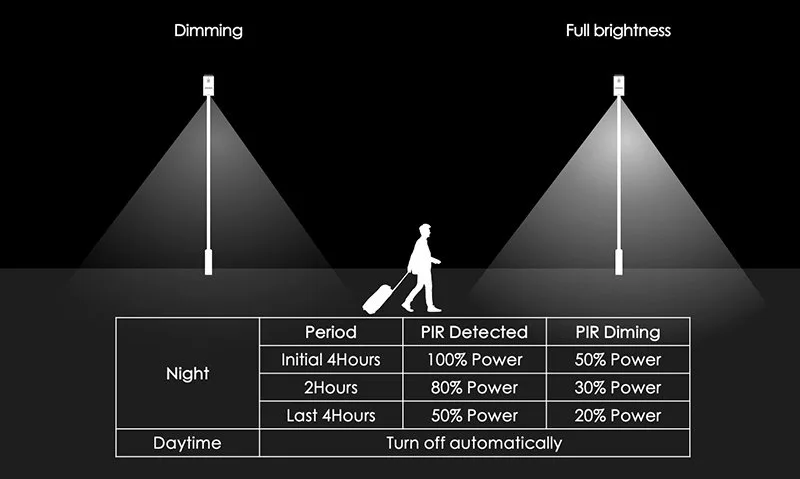
Adaptive Networked Lighting (IoT / CMS)
Advanced systems use a central management platform to adjust each luminaire in real time based on:
traffic flow
weather conditions
public events
emergencies
Studies in ScienceDirect show that IoT-based adaptive lighting can improve safety while cutting unnecessary light and energy waste by 48% or more.
Overall Impact
By combining photocells, motion sensors, dimming schedules, and networked control, cities can reduce both energy waste and sky-glow, while keeping streets safe. Modern smart controls consistently deliver 30–70% reducing light pollution and operating cost, making them essential for sustainable LED street-lighting projects.
Solar Street Light Design and Light Pollution Control
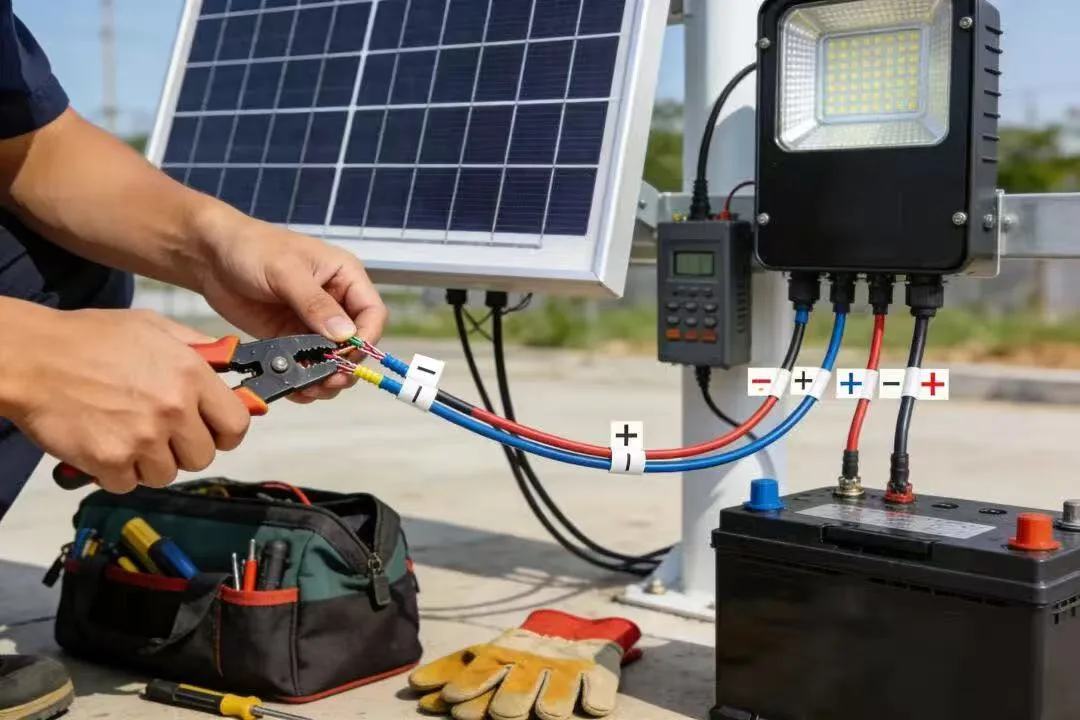
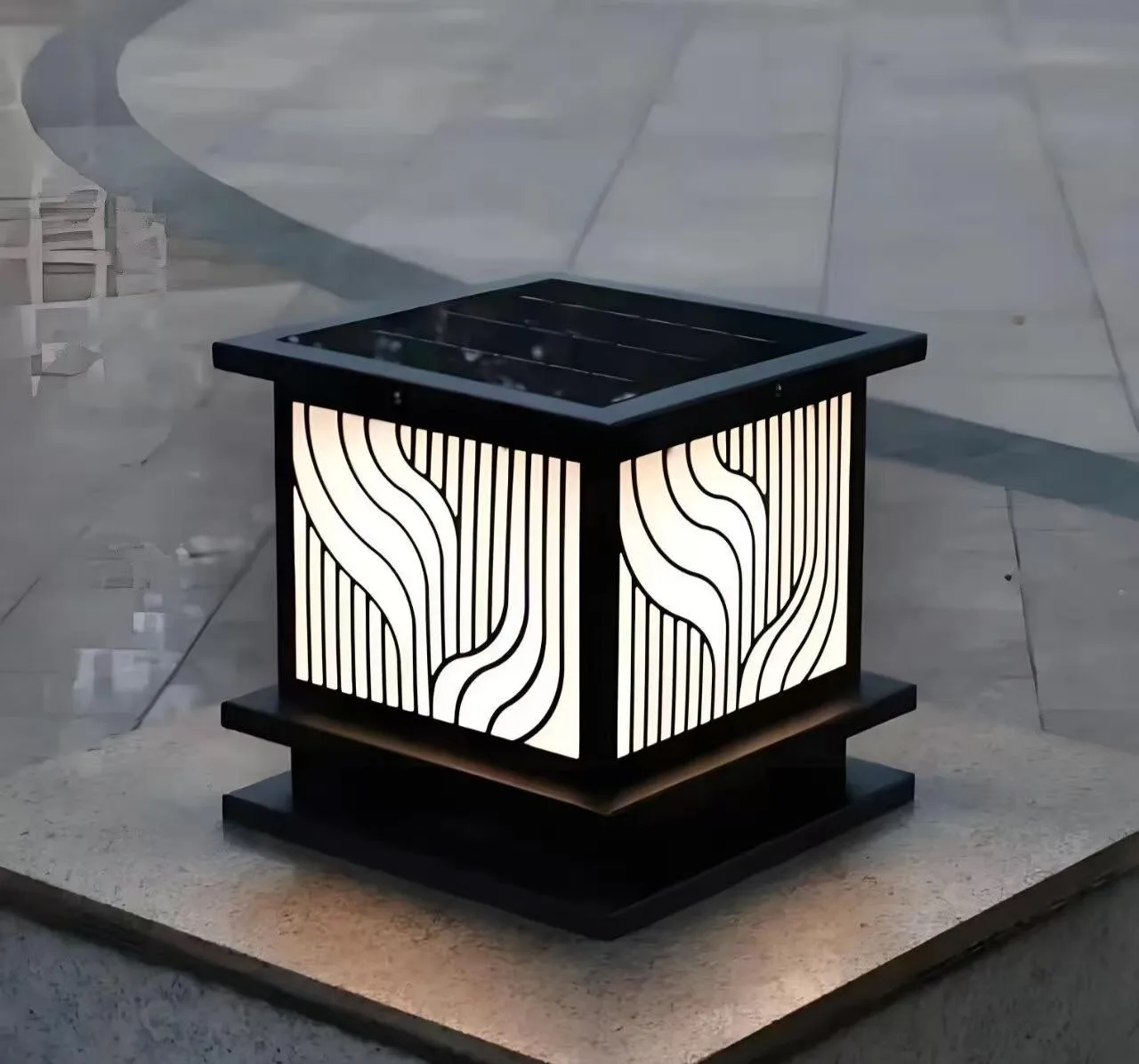
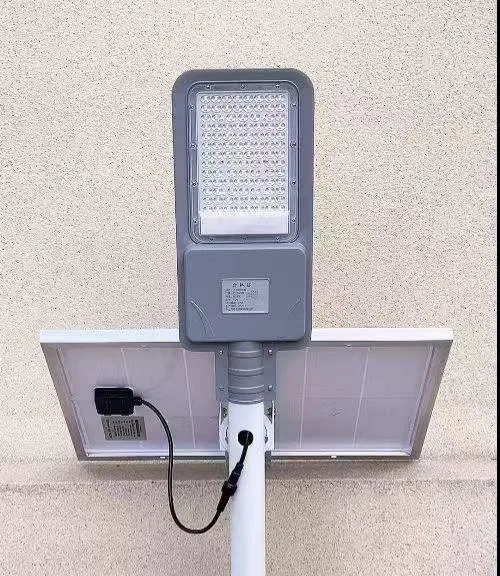
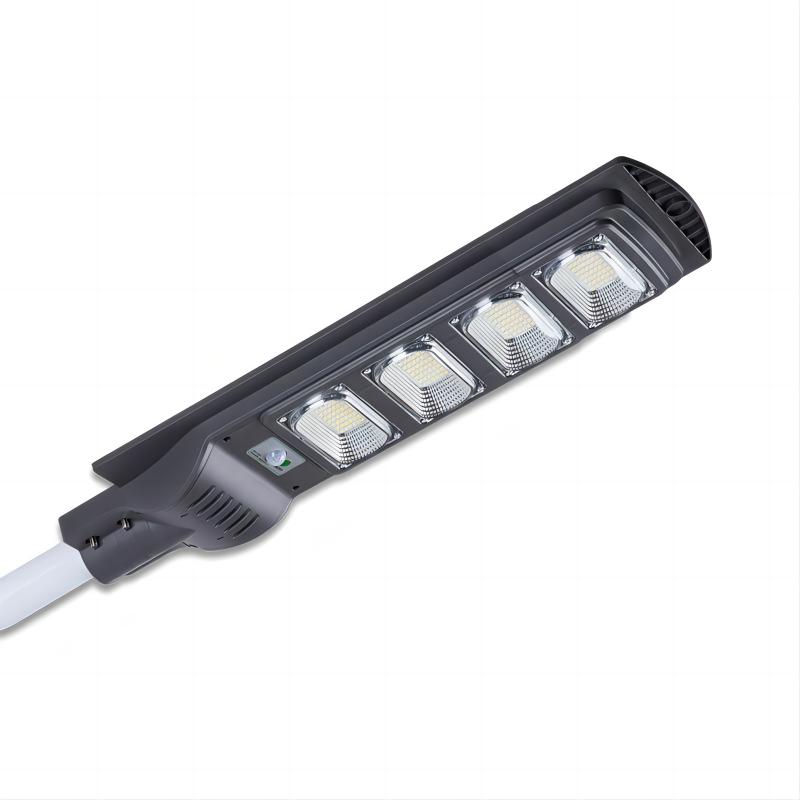
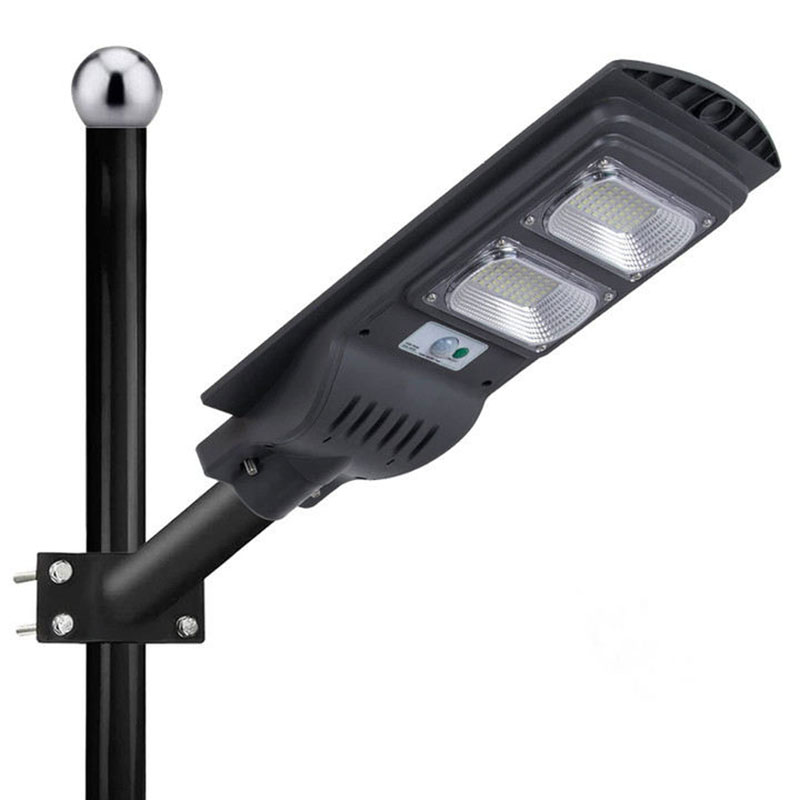
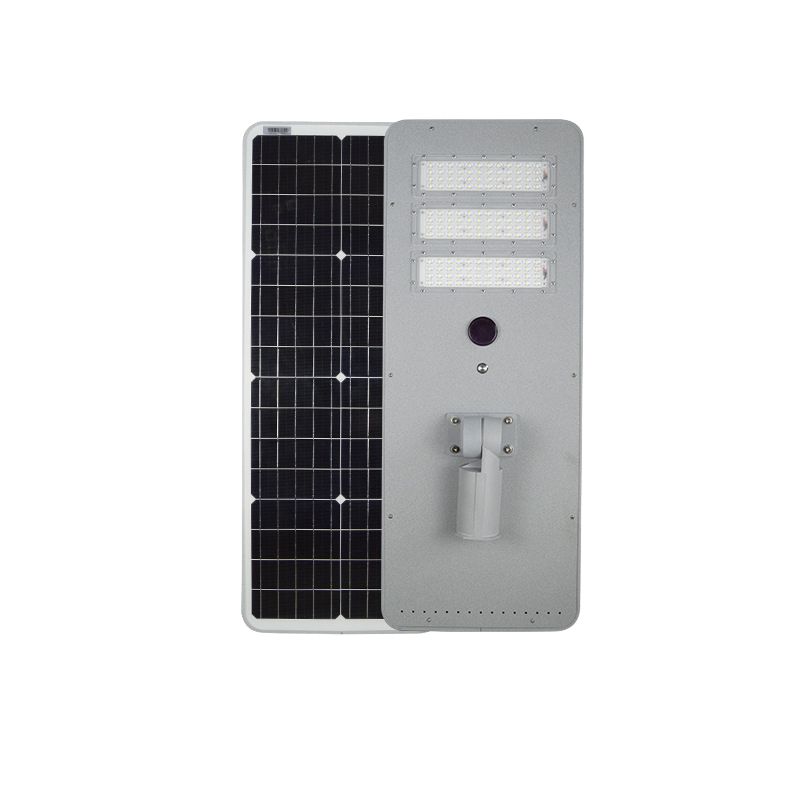
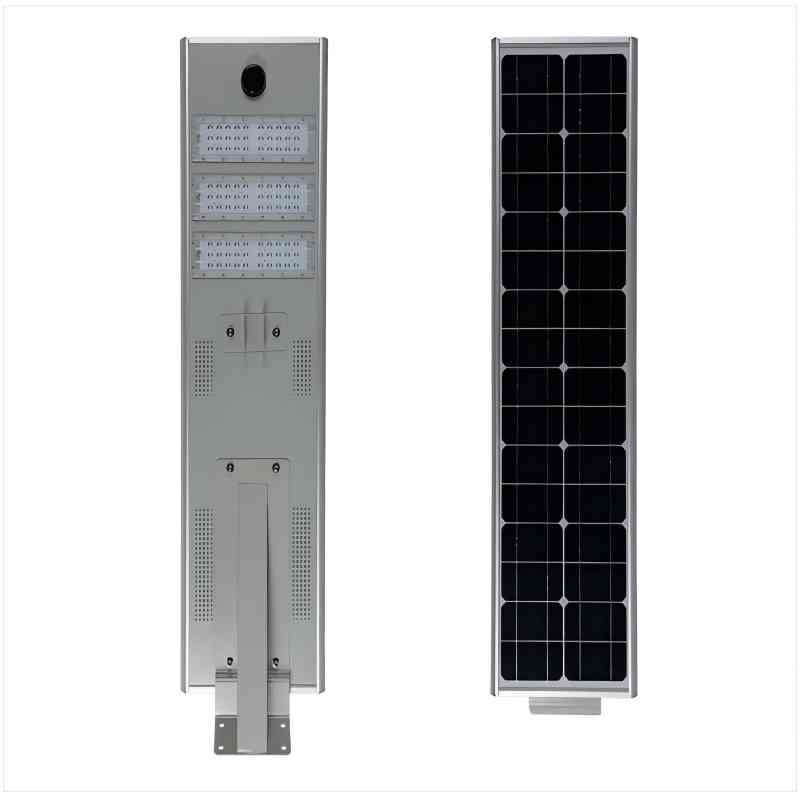
Some competitors claim that solar street lights naturally reduce light pollution—and there is research to support this when the system is correctly engineered. Solar systems typically use lower lumen output, built-in dimming, and precise integrated optics, which help avoid over-lighting and spill light. They are also easier to deploy in ecological zones where power lines are not available and where wildlife-friendly lighting levels are required.
Effective solar street-light design follows several proven principles: full-cutoff optical control to prevent uplight, low-CCT LEDs (2200–3000K) to reduce blue-light scatter, intelligent dimming profiles triggered by motion or time, and lumen output optimized according to battery capacity. Studies published in MDPI, IEEE, and Lighting Global show that these features significantly reduce sky-glow, glare, and trespass compared with conventional HID lighting.
When solar panels, LEDs, optics, and smart controls work together, the result is a zero-grid, low-pollution lighting system suitable for residential streets, parks, pathways, and environmentally sensitive zones.
Application Scenarios Where Light-Pollution-Reduction Matters Most
Residential Neighborhoods
Residential streets require lighting that protects comfort and prevents disturbance. According to EN 13201 and CIE 150 guidelines, glare must be minimized and light trespass controlled, with no more than 1–5 lux reaching residential façades at night. Full-cutoff optics help prevent window intrusion, and lower-CCT LED sources reduce night-time eye strain and support healthy sleep patterns, as confirmed by AMA and WHO findings. Together, these strategies improve nighttime comfort while maintaining safety.
Wildlife Corridors & Green Belts
Ecologically sensitive zones require lighting that minimizes disruption to nocturnal species. IDA recommends 1800–2200K warm CCT to reduce blue-light scattering, while full-cutoff luminaires (0% uplight) prevent sky-glow. Studies from Royal Society Biology Letters and the Ecological Society of America show that low-power, adaptive lighting profiles significantly reduce interference with migration routes, insect populations, and feeding patterns. These measures help protect local ecosystems while still providing safe illumination.
Parks, Pedestrian Areas & Waterfronts
Public recreational spaces benefit from soft, low-intensity lighting that maintains visibility without degrading natural ambiance. CIE 150 advises minimal spill light, especially near residential edges and natural habitats. Warm, comfortable color temperatures (2200–2700K) are recommended by IDA and AMA for public environments. Motion-activated zones can reduce unnecessary light by 50–80%, according to recent MDPI and ResearchGate studies, further lowering energy use and light pollution.
Highways & Interchanges
High-speed traffic environments require precise optical control to ensure driver safety. EN 13201 and IES RP-8 specify strict roadway distributions (Type II–IV) to maintain uniformity while preventing sky-glow. Full-cutoff designs and accurate aiming help eliminate uplight, while controlled luminance reduces disability glare—the leading cause of nighttime visual discomfort. Proper engineering in these zones ensures safe mobility and minimizes environmental impact.
Commercial Districts
Commercial areas often contain reflective surfaces, signage, and building-mounted fixtures that can generate uncontrolled spill light. CIE 150 identifies façade reflections as a major source of secondary light pollution, making optical shielding and downward-directed distribution essential. BUG-rated luminaires with U0 (no uplight) help minimize sky-glow, while controlled pole-mounted and wall-mounted lighting reduces spill into windows and public spaces. These strategies maintain visual comfort in busy urban environments.
A Practical B2B Buyer Guide for Low-Pollution Street Lighting
When evaluating LED or solar street lighting for light-pollution control, the design must follow proven international standards such as CIE 150, EN 13201, Dark-Sky guidelines, and IES optical classifications. The following checklist summarizes the core requirements supported by these standards and by leading manufacturer photometric files.
Optical Control
Lighting must deliver 0% uplight (ULR = 0) and use full-cutoff optics, as recommended by CIE 150 and Dark-Sky International. Certified roadway lenses—Type II, III, IV, or V—ensure light is directed onto the pavement with minimal spill into adjacent areas. Glare shields or visors may be added in sensitive zones to further restrict horizontal glare and prevent light escaping into windows or the sky.
Light Quality
To reduce blue-light scatter and protect both residents and wildlife, color temperature should remain ≤ 3000K, following AMA and IDA guidance. High-CRI light improves visibility without relying on high-blue content. This combination reduces visual discomfort and helps maintain natural circadian rhythms.
Glare Control
Use optical designs that minimize UGR, limit high-angle luminance, and apply asymmetric roadway distributions to reduce disability glare for drivers. EN 13201 and IES RP-8 both emphasize controlling TI (Threshold Increment) to maintain road-user safety.
Adaptive Controls
Smart control systems significantly reduce excess lighting. Photocells limit operation to nighttime, motion or radar sensors allow dimming in low-traffic zones, time-based dimming reduces output after midnight, and networked controls (LoRaWAN / NEMA / CMS) adjust brightness based on traffic, weather, or emergency events. Research from MDPI, IEA, and smart-lighting case studies shows 30–70% reductions in energy use and unnecessary light output.
Environmental Compliance
Systems should comply with EN 13201 roadway lighting categories, CIE 150 obtrusive-light limits, and Dark-Sky lighting-zone guidelines (E1–E4). This ensures proper control of sky-glow, glare, and trespass in residential, commercial, and ecological districts.
Installation Parameters
Correct installation is essential. Pole height must match roadway width, tilt angle should remain at 0° to avoid upward spill, and spacing must ensure uniformity without over-illumination. Lumen output should be balanced to meet target illuminance levels without exceeding EN/IES requirements, which is crucial for reducing sky-glow and visual discomfort.
Conclusion: Better Street Light Design Enables Cleaner, Healthier Cities
Light pollution is not an unavoidable consequence of urban lighting. It is a design problem, and with modern LED street lights, precise optics, control systems, and thoughtful planning, cities can dramatically reduce sky-glow, glare, and energy waste.
Municipalities adopting full-cutoff LED fixtures, warm color temperatures, and adaptive lighting strategies are achieving measurable improvements in urban comfort, wildlife safety, and sustainability.
Outdoor lighting should make cities safer—not brighter than necessary. Thoughtful street-light design ensures the right light, at the right place, at the right time.