Skip to content
Installing a street light sounds simple. Buy a light. Put it on a pole. Turn it on.In real projects, the cost is not just the street light with led. The biggest costs are often digging, wiring, permits, and labor. This guide shows what drives street light installation cost, what a price street light should include, and who pays for street led lights in common cases.
Quick answer: typical street light installation cost ranges
street light installation cost can vary a lot by site and by scope. Use ranges, then adjust with your site facts.
Typical ranges (budget level, not a promise)
| Scenario | Typical total cost per light (installed) | What usually drives the cost |
| Replace an existing light on an existing pole | $1,000–$4,000 | Labor, lift truck, simple wiring, short outage window |
| New light in a developed area (needs trenching) | $4,000–$15,000+ | Trenching, conduit, wire, pavement restore, traffic control |
| New subdivision (planned utilities) | $2,500–$8,000 | Repeat installs, easier access, known drawings |
| Bridge / highway / strict traffic control | $10,000–$30,000+ | Lane closures, permits, safety crews, harder foundations |
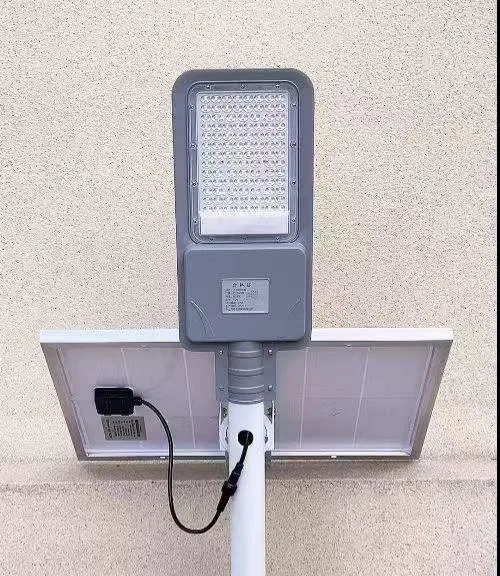
| Off-grid solar street light (no trenching) | $2,000–$8,000 | Pole/foundation + solar kit quality + install crew time |
These ranges are not “price street light” for the fixture only. They are “street light installation cost” for a full install.
First question: who pays for the street lights?
Many projects fail at step one. People get a quote, then learn they are not allowed to install it, or they are not the one who pays.Who pays for the street lights depends on who owns the road and the power service.
A simple decision flow (copy/paste)
Start
|
vIs the light on public right-of-way (ROW)?
|– No –> Private site owner pays (HOA, business, developer)
|
|– Yes –>
|
v
Does the city/municipality own and maintain street lights there?
|– Yes –> City pays (sometimes via a program or assessment)
|
|– No –>
|
v
Does the utility own the street light system (rental model)?
|– Yes –> Utility bill pays monthly charge (owner/HOA may pay)
|
|– No –> Mixed case: city approves + owner funds installation
Common real-world cases
HOA / residential area: The HOA often pays, even if the street is public. The city may approve the plan, but not fund it.
New subdivision: The developer often pays for the first install and hands it over later.
Utility “rental” street lights: The utility may install and own it, then charge a monthly fee. This is why people ask, “how much does a street light cost per month.”
Private parking lots: The property owner pays. The job is closer to “parking lot light pole installation cost” than city street lighting.
If you are unsure, ask for two things:
Who owns the roadway or easement.
Who owns the street lighting asset today (city or utility).
How much does a street light cost? (fixture only)?
Many buyers search “street light cost,” “street lamp cost,” or “how much do street lamps cost,” but they may be mixing fixture price with installed price.
A basic fixture price can range from a few hundred to a few thousand dollars. It depends on:
LED quality and output
Optics (light distribution type)
Driver and surge protection
Housing, IP/IK rating, corrosion level
Controls (photocell, dimming, smart node)
This is “price street light” as a product line item. It is not the full project cost.
If you want a product path, start with [LED Street Light] and match:
Road width and pole spacing
Mounting height
Target light level and glare limit
Street light installation cost breakdown (what a real quote should include)
A good quote is not one number. It is a clean list of scope items.
Cost buckets that matter
Hardware
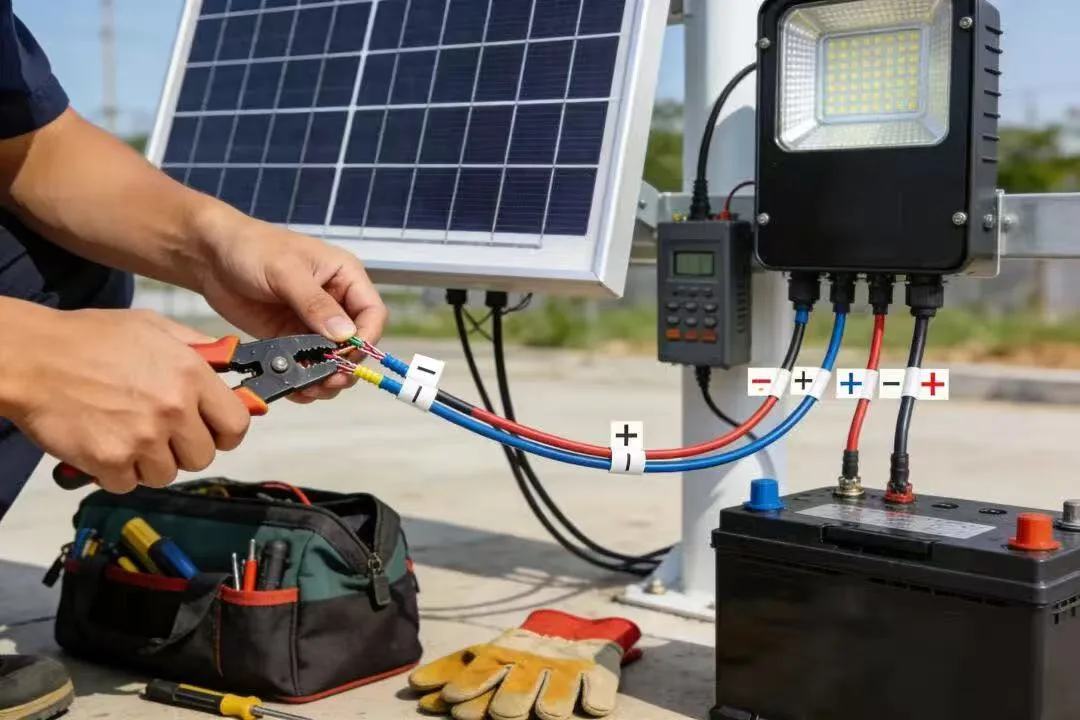
The hardware for led solar street lights installation includes the fixture (street light head) and, if needed, a pole and arm.A base plate, anchor bolts, and rebar cage may be needed for support. Controls like a photocell, dimming, and smart node help control the light. Lastly, conduit, wire, grounding, and breakers are needed to connect the system and keep it safe.
Civil work
Civil work for solar powered led street lights installation includes trenching to dig spaces for wiring, followed by backfill to cover the trenches. A concrete foundation is poured to support the pole. If needed, a pavement cut is made to access underground utilities, and the pavement is restored afterward. In some cases, it may be necessary to bore under roads to lay the conduit without disrupting traffic.particularly for projects involving cob led modules for street lights or cobra head LED street light designs.
Electrical work
Electrical work includes pulling wire, making terminations, and setting up the service connection. Other tasks may include metering or panel work. The job needs crew hours, lift trucks or bucket trucks, and mini excavators or compactors. Traffic control crews and signage are needed for safety. Permits and approvals are needed, including right-of-way permits and utility coordination. There may be inspections, and as-built drawings may be needed after the project.
Labor and equipment
Labor and equipment needs include crew labor hours to complete the work on site. A lift truck or bucket truck is used to set poles and mount led street light fixtures safely at height, including common ratings like 50w led street light, 100 watt led street light (100w led street light), 150w led street light, and 200w led street light. A mini excavator and compactor help with digging and preparing the ground. In busy areas, a traffic control crew and clear signage are also needed to protect workers and guide vehicles.
Permits and approvals
Permits and approvals may include right-of-way permits before work begins. The team must also do utility coordination to avoid hitting existing lines. During or after the job, inspections may be needed to meet local rules. In some cases, as-built drawings are required to show the final layout.
Quote checklist table (included vs optional vs red flags)
| Line item | Included (should be) | Optional (depends) | Red flag if missing |
| Fixture + spec sheet | Yes | — | “Generic 100W street light” with no photometric data |
| Pole/arm/foundation details | Yes for new installs | Replacement may not need | “Pole included” but no height, wall thickness, or base info |
| Trenching length and method | Yes if new wiring | Boring under roads | “Trenching TBD” with no unit rate |
| Pavement restoration scope | Yes when cutting | Depends on surface type | No mention of asphalt/concrete repair |
| Traffic control plan | Yes on public roads | Smaller on private sites | No mention of lane closure costs |
| Permit and inspection fees | Yes or clearly excluded | Some clients handle permits | Hidden as “misc” with no estimate |
| Warranty and service response | Yes | Extended plans | No stated warranty on driver/LED |
| Utility connection responsibilities | Yes | — | “Owner to coordinate” with no steps listed |
Hidden costs that blow up budgets
This is why two jobs with the same light can cost 3x apart.
Trenching is the cost multiplier
Trenching cost is often the biggest factor in a quote. It includes saw cutting, conduit placement, warning tape, backfill, compaction, and surface repair. When comparing quotes for LED street light pole installations, focus on trench length and restoration type, not just price. If trenching is difficult or not allowed, many compare grid-tied vs street solar led lights.
Site surprises
Common surprises that add cost include unknown underground utilities, rock, bad soil, tree roots, tight access, and night work rules in residential zones. A strong contractor includes unit rates for these issues, while a weak quote may ignore them and add change orders later.When opting for LED street lights solar, unforeseen issues could lead to higher installation costs.
Admin and coordination overhead
Large projects involving LED solar street light installations require extensive project management,, coordination meetings, safety plans, documentation, and inspection scheduling. While these “soft costs” may seem small, they add up and can slow down the project timeline.
How much does a street light cost per month?
People ask this because many outdoor led street lights are billed as a service. The monthly charge can include energy use, maintenance (lamp/driver replacement, labor), asset rental (utility-owned pole/light), and an admin fee. This explains why some areas pay $10–$30/month per light, while others pay more.
Simple energy math (for planning)
To calculate monthly energy cost, use:
Energy per month (kWh) ≈ (Watts × hours per night × 30) / 1000. For example, 100W × 12 hours × 30 / 1000 = 36 kWh/month. Then, multiply by your local electricity rate. If bundled, include maintenance and rental. Ask your utility about tariff details and how upgrades are priced.
How to get a street light installed (and avoid the runaround)
Many people search “how to get a street light installed” or “how do i get a street light installed.” The process is often more complex than the hardware.
Typical steps
Confirm ownership and rules
City vs utility vs HOA vs private site owner
Request a site review
Location, spacing, and glare concerns
Safety needs (crosswalk, curve, school zone
Choose the delivery model
City-funded program
Utility rental
Private-funded install with permits
Get a scoped quote
With trench length, restoration, and permits clarified
Approve photometrics (if required)
Many projects need a lighting plan or IES file
Schedule permits, traffic control, and install
Then inspection and energization
If you are dealing with a “street light company,” you want one that can handle both the product and the project scope. For advanced work, look for support on [Lighting Design (Dialux/AGi32)].
Grid-tied vs solar: which is cheaper on total cost?
There is no universal winner. The site decides.
When grid-tied is often cheaper
Power is already nearby
Trenching is short and easy
The road authority allows cuts and restoration
You want high output for major roads with stable power
When solar often wins
Trenching is long, blocked, or expensive
The site is remote
Permits and utility coordination cause delays
You need fast deployment with less civil work
Solar avoids wiring, so it often reduces the biggest hidden cost. But solar is not “free.”
Solar long-term planning (the honest part)
Solar street lights can have:
Battery replacement cost later
Higher risk if sizing is wrong (short winter days)
Higher value if designed well (right panel + battery Wh + smart dimming)
When comparing, do not compare “watt” labels. Compare:
Panel watts and size
Battery watt-hours and usable depth
Lighting profile (average watts over the night)
Optics and light distribution
If you need a higher-power area light, some clients compare against [LED Flood Light]. That is where “cost to install floodlight” and “flood lights installation cost” become related topics.
Related installs: floodlights, parking lots, and “Amazon lights”
Some searches mix street lights with other outdoor lighting.
Cost to install floodlight / flood lights installation cost
Floodlights can be cheaper to mount when:
They go on an existing wall or pole
No trenching is needed
Power is nearby
But high-mast or new-pole floodlights can also be expensive. The pattern is the same: civil work and wiring drive cost.
If you are comparing options for a site perimeter, start with [LED Flood Light] and define the goal (security, area lighting, signage).
Parking lot light pole installation cost
Parking lots often need:
Taller poles
Wider spacing
Stronger foundations (wind load)
More fixtures per pole
This is why parking lot pole installs can be in the same cost band as street lights. The good news is the site is private, so permits can be simpler.
“Street light Amazon” questions
Some teams search “street light amazon” for quick product pricing. That can be fine for small private installs, but it often fails for:
Compliance requirements
Photometric performance needs
Warranty and parts support
Long-term maintenance
For B2B projects, the purchase price is only one part of the total job.
A simple 30-minute cost model (repeatable)
You can build a useful estimate with a few inputs.
Inputs checklist
How many lights
New poles or existing poles
Pole height and arm length
Distance to power source
Trench length (feet or meters)
Surface type (soil, grass, asphalt, concrete)
Traffic control level (none / cones / lane closure)
Permit needs (private / public ROW)
Control needs (photocell / dimming / smart node)
Example scenario (showing the logic)
Assume a small residential street:
6 new lights
25 ft poles with simple arms
200 ft trench per light on average
Asphalt restoration required
Standard traffic control
Build the estimate as:
Hardware per light (fixture + pole + base materials)
Civil per light (trench + restore)
Electrical per light (wire pull + terminations)
Labor/equipment per light (crew + lift + excavator)
Permits/project management (spread across all lights)
This creates a defensible budget that you can refine with real quotes.
Questions to ask contractors (so you can compare fairly)
What trench length did you assume?
What restoration method is included?
Who handles permits and inspections?
What is excluded (utility fees, meter work, traffic control)
What is the timeline and what can delay it?
What warranty is included on driver and controls?
Common mistakes (and how to avoid them)
Comparing only fixture price
“Street lamp cost” is not “street light installation cost.”
Ignoring trenching and restoration
Ask for trench length and unit rates.
Not defining who pays
Clarify who pays for street lights before bidding.
Skipping photometrics
Bad optics can cause glare and poor uniformity.
No plan for maintenance
Define service response and spare parts.
Key takeaways
Street light installation cost is driven more by civil and electrical work than by the fixture.
Trenching and pavement restoration are common budget killers.
Who pays for the street lights depends on ownership (city, utility, HOA, private site).
Monthly charges can include energy, rental, and maintenance—ask what is bundled.
Grid-tied is often best when power is close; solar often wins when trenching is expensive or slow.
A good quote lists scope clearly and shows assumptions.
Compare quotes by unit rates and quantities, not just totals.
Plan long-term: warranty, maintenance cycles, and risk costs matter.
FAQ
How much does it cost to install a street light?
It depends on the site. Replacement on an existing pole can be much cheaper than a new install that needs trenching and restoration.
How much do street lamps cost?
Fixture cost varies by output, optics, and quality. But installed cost can be several times higher once you add pole, foundation, wiring, and labor.
Who pays for street lights in a residential area?
It can be the city, the utility, the developer, or the HOA. Many residential upgrades are HOA-funded even when the street is public.
How much does a street light cost per month?
If billed by a utility, monthly cost may include energy plus rental and maintenance. Ask for the tariff and what is included.
How do i get a street light installed?
Start by confirming ownership and rules, then request a site review, select the funding model, and get a scoped quote that includes permits and trench assumptions.
What about “average cost of can light installation”?
Can lights are indoor recessed lights. Their install cost does not translate well to street lighting because street lights need poles, foundations, and outdoor electrical work.
What does “FPL post light Mesa” mean?
Many people search utility or city program names with a location. If you are in an area served by a utility like FPL, check their street light service pages and tariffs, then ask about post-light options and monthly charges.
CTA
If you want a quote you can defend, prepare a one-page scope with: location map, target pole heights, approximate trench lengths, and whether the work is in public right-of-way. Then request a cost breakdown, not a single number. If you need help matching output, optics, and layout, start with [LED Street Light], [Solar LED Street Light], and [Lighting Design (Dialux/AGi32)] so you can compare proposals on the same basis.