Skip to content
solar lighting outdoor has two different “last” questions: How many hours does it stay on at night? (runtime) and How many years will the product keep working? (service life). People often mix these up. A solar lamp light can run 8–12 hours tonight, but still fail in two years if the battery or seals are weak. On the other hand, a led solar lamps outdoor can also “last” five years, but only run 3–5 hours per night if it is under-sized. This guide keeps it simple. It explains what decides runtime, what decides years of life, and what to check before you buy.
Quick answer: typical hours at night
Most outdoor led lights solar do not run at full brightness all night. Many use a profile like this: bright for 1–3 hours, then lower light for the rest of the night. That is how many products can claim “dusk to dawn” or “all night.”
Table A — Night runtime expectations (by product type)
| Product type | Typical lumen range | Typical battery size (Wh) | Expected hours (summer) | Expected hours (winter) |
| Path / stake light | 10–150 lm | 2–10 Wh | 6–12 h (often dims) | 3–8 h |
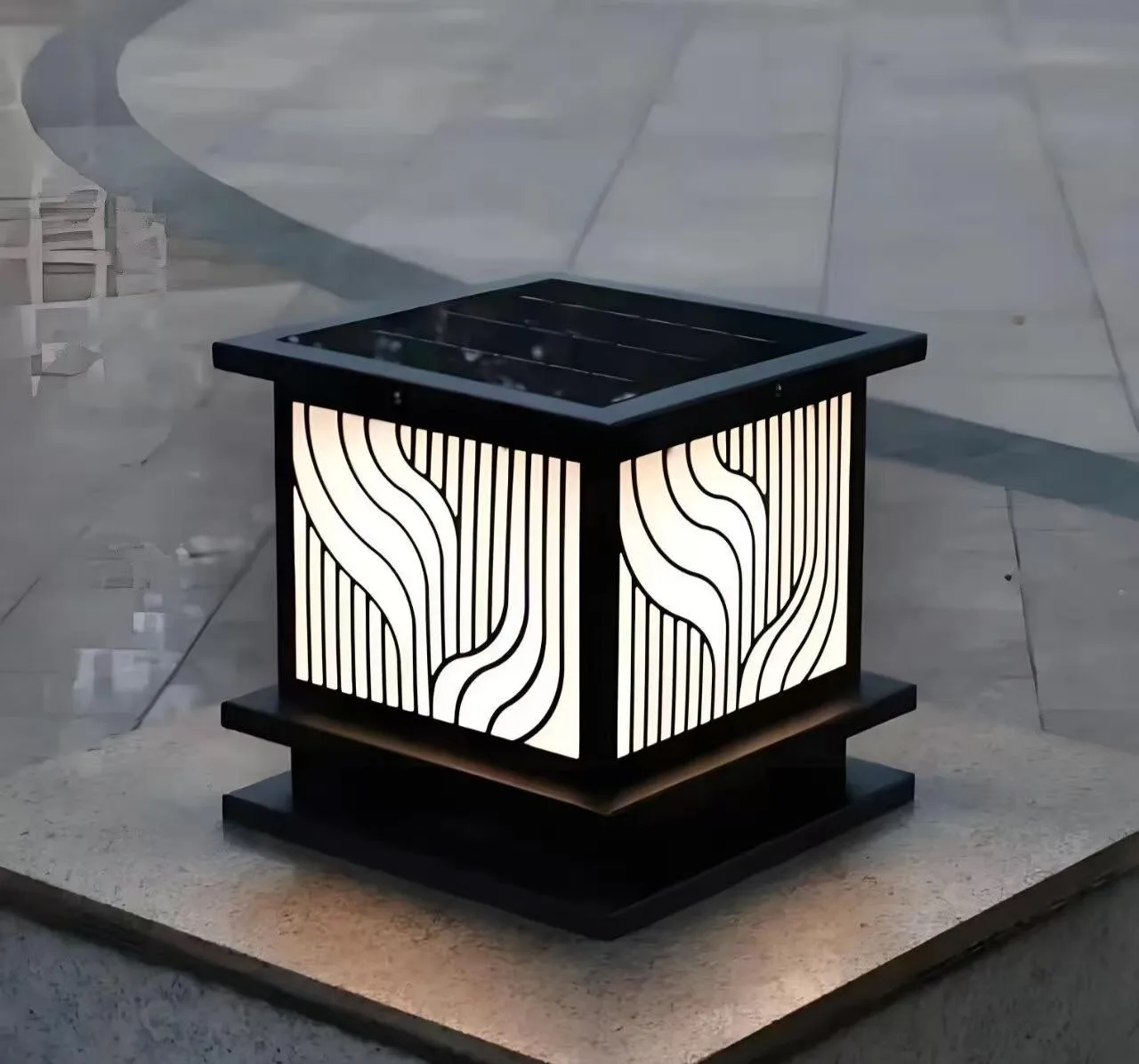
| post cap solar lights | 10–80 lm | 2–8 Wh | 6–12 h | 3–8 h |
| string solar lights | 20–200 lm (total) | 5–20 Wh | 6–10 h | 3–7 h |
| solar spotlight (accent) | 50–300 lm | 5–25 Wh | 4–10 h | 2–7 h |
| outdoor decorative solar lanterns | 20–200 lm | 5–30 Wh | 5–12 h | 3–8 h |
| solar motion sensor security light | 300–2000+ lm (on trigger) | 10–60+ Wh | All night in standby; short bursts at high output | Shorter bursts; fewer triggers recommended |
What “all night” usually means
It often means the light stays on in a low mode, not necessarily at full brightness for 10–12 hours. If your site needs stable lighting, ask for a runtime curve. A clear spec should show output over time. You will see searches like “solar lights that stay on all night,” but the correct buyer question is: “At what brightness level, and in what season?”
What controls night runtime (simple system model)
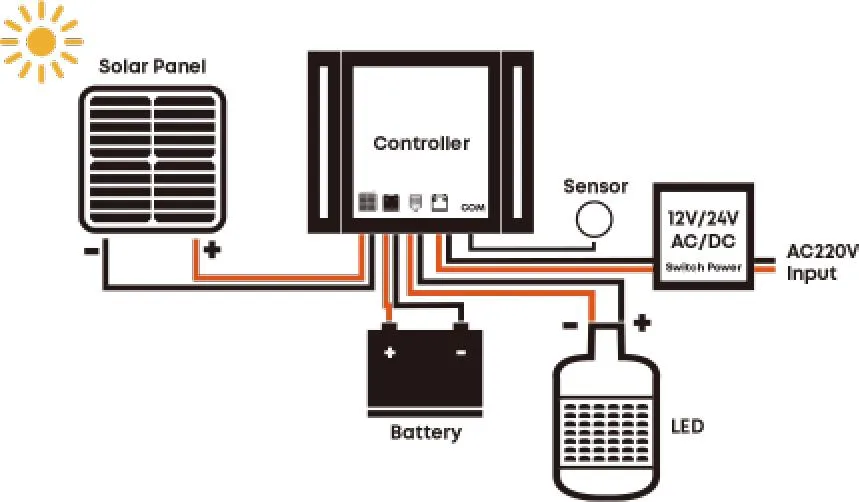
Energy in comes from the solar lights separate panel, sun hours, panel angle, and shade. Energy stored depends on the battery size (Wh) and battery health. Energy out is determined by LED power (W) and the dimming plan.
Battery Wh matters more than “mAh”
In solar lights, Wh (Watt-hours) is more important than mAh (milliampere-hours). Many ads only show mAh, which can be confusing. Wh is better because it includes voltage, giving you a full picture of the battery’s energy.
Higher Wh = more runtime at night
A higher Wh means the battery can store more energy, letting the light stay on longer.
Lower Wh = dimming or shut off earlier
A lower Wh means the battery has less energy, so the light will dim or turn off sooner.
This also affects solar powered garden lights battery life and how long solar powered shed light with battery will operate through the night. How long does a solar battery last at night depends on the solar and battery lights system’s total energy capacity and the solar battery lights design.
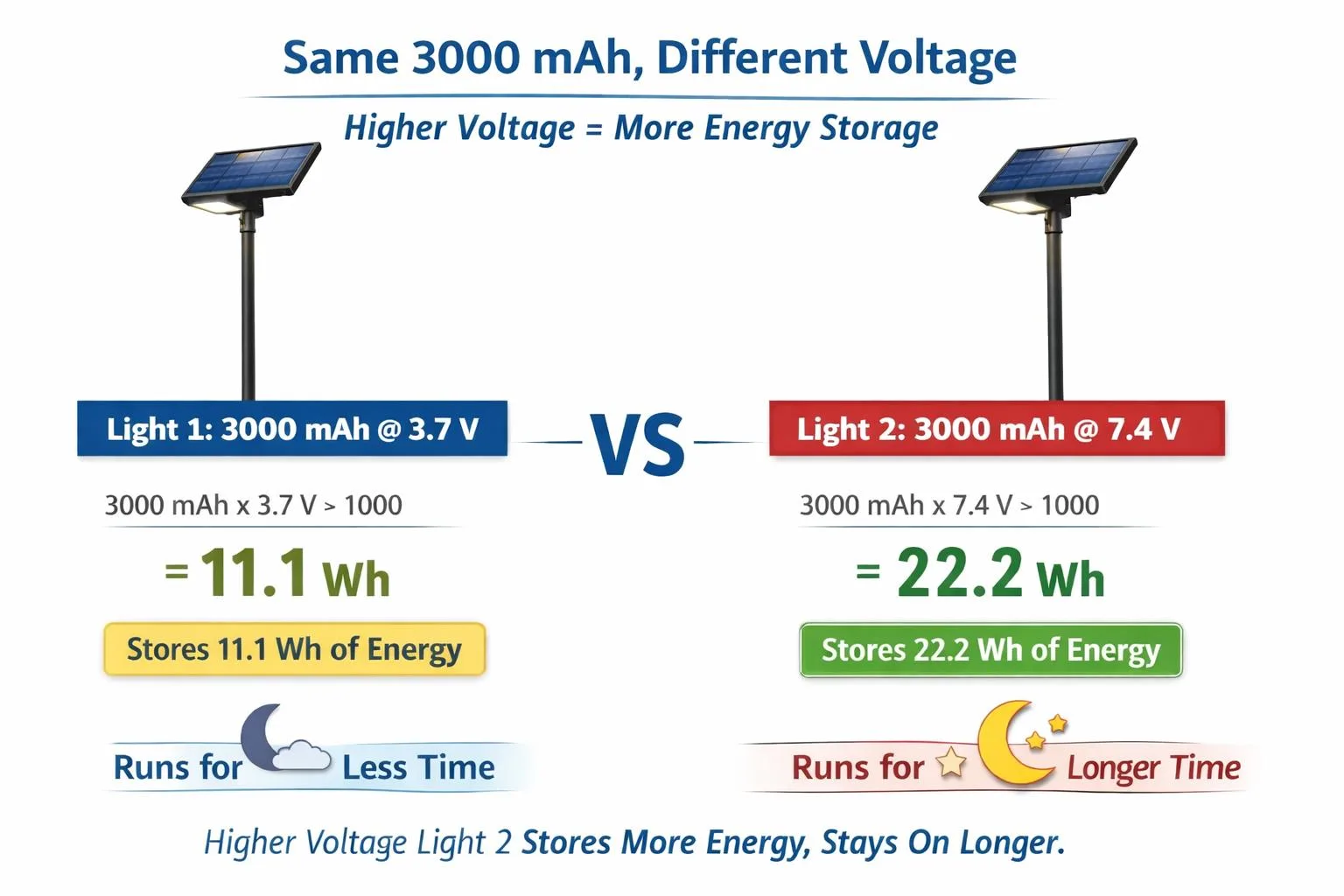
imagine you have two solar lights with the same mAh (say 3000 mAh), but they use different voltages.
Light 1: 3000 mAh at 3.7 V
Light 2: 3000 mAh at 7.4 V
Now, let’s calculate the Wh for each:
Light 1:
Wh = (3000 mAh × 3.7 V) ÷ 1000 = 11.1 Wh
This means Light 1 can store 11.1 Wh of energy.
Light 2:
Wh = (3000 mAh × 7.4 V) ÷ 1000 = 22.2 Wh
This means Light 2 can store 22.2 Wh of energy.
Even though both lights have the same mAh, Light 2 can store more energy because it has a higher voltage, so it can stay on longer during the night.
Light output and watts are linked
Lumens show how bright the light is, while Watts show how much power the light uses. They are connected, but not the same. Here’s a simple way to understand it:
More lumens usually mean more watts
More lumens usually need more energy to make the light brighter.
More watts need more battery and more panel
More power means you need a bigger battery and a bigger solar panel to keep the light on for longer.
“Very bright” lights need a bigger system. If not, they dim fast.
If a light is very bright but doesn’t have a big enough battery or panel, it will dim quickly or not stay bright for long.
Winter, shade, and dirt are the real test
Lights often don’t last as long when these things happen:
Days are shorter
In winter, shorter days mean less time for the solar panel to charge.
Sun is weaker
In winter, the sun is weaker, so the panel doesn’t charge as quickly.
The panel has shade
Even a small shadow can reduce how much energy the panel can collect.
The panel is dirty
Dust on the panel makes it harder to collect sunlight.
The battery is cold
Cold weather reduces how much energy the battery can store.
Cold matters
Cold weather not only makes charging slower, but it also means the battery stores less energy, so the light will stay on for less time at night.
Shade matters even more
Shade is one of the biggest problems for solar panels. A small shadow can reduce how much energy the panel gets, which makes the whole system work worse.
led motion solar lights behave differently
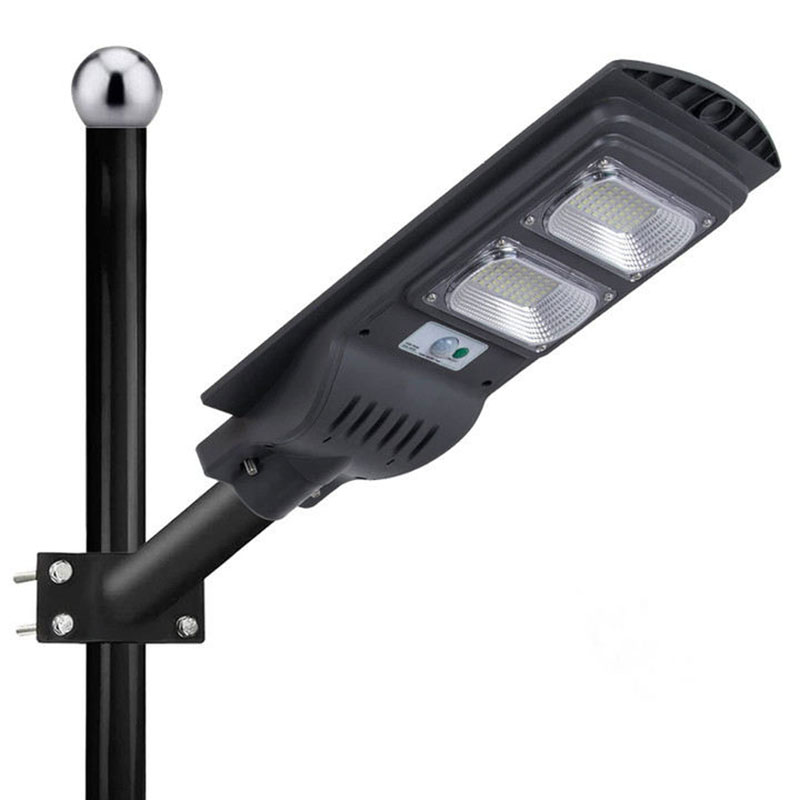
solar outdoor motion lights often feel “strong” because they have a high peak output for short periods. However, they don’t stay at full brightness for long.
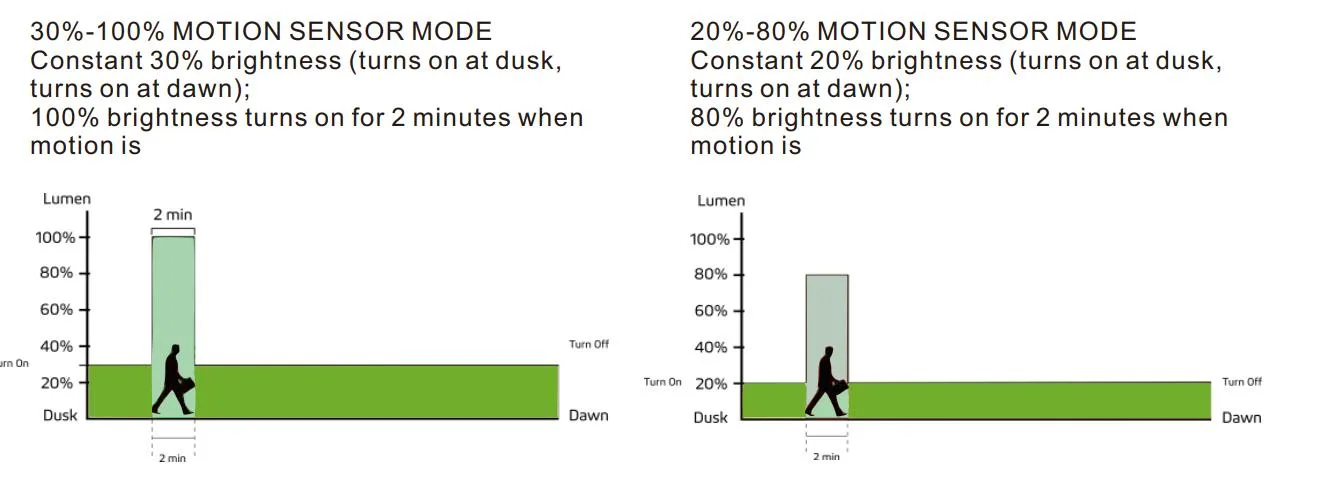
Many motion sensor solar powered lights work in two modes, similar to the modes shown in the image
Low standby mode: When no motion is detected, the light stays on in a low-power mode to conserve energy. For example, it may operate at 20%-30% brightness from dusk to dawn.
High output mode: When motion is detected, the light jumps to full brightness (100%) for a short time (usually around 2 minutes), as illustrated in the image, before returning to the low-power standby mode.
This way, solar led motion detector lights use less energy because they only shine brightly when needed. This is especially useful for solar powered security lighting, as it provides sufficient illumination during activity but conserves energy when there is no motion.
How many years do solar lights last?
Now we shift to the second “last” question: years of service life.
In most outdoor lights solar, the battery is the first part to age out. The panel and LED can last much longer, but only if water and heat are controlled.
Table B — Typical component lifespan (what fails first)
| Component | Typical life | What usually fails | What helps it last longer |
| Solar panel | 10–25 years | cracked glass, bad sealing, corrosion at junction | good sealing, strong frame, proper mounting |
| Battery (NiMH) | 1–3 years | capacity drops, poor cold performance | avoid deep discharge, good charging control |
| Battery (Li-ion) | 2–5 years | capacity drop, heat aging | heat control, good BMS, safe charge limits |
| Battery (LiFePO4) | 3–8 years | capacity drop over cycles | correct charge profile, temperature control |
| LED light source | 5–10+ years | gradual dim, heat damage if poorly designed | good thermal path, lower drive current |
| Controller / sensor | 3–8 years | water damage, component aging, sensor failure | sealed housing, stable design |
| Housing, seals, lens | 2–10 years | water ingress, fogging, UV aging, gasket wear | better gaskets, UV-stable plastic, proper vents |
Simple buyer truth:
If a product is “not serviceable,” the whole light is often replaced when the battery fails. For B2B projects, it helps when key parts are replaceable, such as the battery pack, lens and gasket, stakes or mounts, and the sensor module. This is why searches like “longest lasting solar lights” should really mean: long-life parts, replaceable parts, and a stable runtime profile.
Common problems that cut runtime (and what to check)
If solar light lights turn off early, it is usually one of these causes.
Not enough sun on the panel
Common site issues include the panel facing the wrong direction, trees growing and adding shade, roof edge shade hitting the panel in winter, or the panel sitting under a deck rail shadow. To quickly check, look for shade on the panel during the best sun hours and check again in winter when the sun’s angle changes if possible.
Battery is aging
Common signs include a drop in runtime over months, the light being bright early on but dying quickly, and struggling after cloudy days. If the design allows it, changing the battery can restore runtime. This is why many people search for “solar and battery lights” or “solar rechargeable LED light.”
Water ingress and fog
Water and fog are big killers. Once moisture enters, it can damage the controller, corrode contacts, and reduce battery life. To check for issues, look for fog in the lens, rust on screws, or green corrosion on the contacts.
Wrong expectations for brightness
A small solar path light will not light a patio, and a high-output spotlight solar powered will not run for 12 hours at full brightness unless the battery and panel are sized properly for it. This is common with ground solar lights used as area lights or with “very bright solar garden lights” listings that have small panels.
Sensor behavior and false triggers
motion lights solar powered can lose runtime if they trigger too often. This can be caused by passing traffic, pets, moving trees or flags, or bad aiming.
Short checklist for buyers and installers
Keep it simple: Is the panel in full sun for most of the day? Is winter runtime stated, or only summer? Is the battery type and Wh clearly listed? Is there a defined dimming profile? Are seals and the IP rating defined for outdoor use? Are parts replaceable (battery, stakes, mounts)? People also search for replacement items like replacement stakes for outdoor lights, solar light bulb replacements, and replacement parts for outdoor solar lights. A project-friendly product line should support these.
B2B procurement checklist: how to verify “long-lasting”
For projects, do not buy by “highest lumens.” Buy by proof.
Ask for these specs (minimum set)
battery type and battery Wh, solar panel watt and panel size, runtime profile (including hours at high output, hours at low output, and what happens in low battery), operating temperature range, IP rating for water and dust, a replaceable parts list (battery, mounts, stakes, lenses), and warranty terms and what is covered. If a listing only says “dusk till dawn lights” but gives no battery Wh and no profile, it is hard to verify.
Match the product type to the job
Solar lighting comes in many types. Some examples people search for include outdoor solar ground lights (for paths and edges), solar powered deck lanterns for rails and steps, decorative lanterns and hanging lights, security and motion lights, and solar-powered string lights for patios.
best solar lights for pathway should show spacing guidance, how bright the light is, and how long do solar pathway lights last in winter.
For accents, solar spotlights for yard should say how wide the beam is, how high to mount them, and how many hours they last in each mode.
For fences, a solar powered fence post light should tell you the post size it fits (like 4×4), how it seals from water, and how to change the battery if needed.
When searching for patio led solar lights, many people look for names like Home Depot, Costco, Lowe’s, Menards, Ace Hardware, and Amazon. This is good for finding products, but a project still needs the right technical details.
Also, remember that in other languages, you might see search terms like luces led solares para exteriores or lampara solar con sensor de movimiento. These terms usually refer to the same products and need the same technical checks.
FAQ + CTA
1)How long do solar lights last at night
Most run 4–12 hours depending on battery size, brightness mode, and sun conditions. Many dim after the first hours.
2) Do solar powered lights work in the winter?
Some can, but output is often lower. Winter has fewer sun hours. Batteries also perform worse in cold. Ask for winter runtime, not only summer.
3) What makes the longest lasting solar lights?
Not one magic feature. It is a mix of: larger battery Wh, adequate panel watt, good charging control, strong seals, and replaceable parts.
4) why do my solar lights stop working early?
Common reasons: shade on the panel, dirty panel, old battery, water ingress, or a high output mode that drains energy fast.
5) How often do batteries need replacing?
Many small consumer lights need battery replacement in 1–3 years. Better systems may run 3–8 years, depending on battery type and use.
6) Can I replace stakes, bulbs, or parts?
Some products allow it, many do not. Check if the brand supports replacement stakes for solar lights, battery packs, and lens/gasket parts. Many solar lights do not use “bulbs,” so “bulb replacement” often means replacing an LED module or the whole head.
7) Are solar lamps indoor OK outdoors?
Usually not. Indoor units may lack weather sealing. Use outdoor-rated products with a clear IP rating.
8) Do motion sensor outdoor lights solar save power?
Yes, often. They keep low output most of the night and go bright only when needed. This can improve “all night” performance.
9) What does “dusk to dawn lighting” mean in solar lighting?
It means the light can stay on from sunset to sunrise, often with dimming. It does not always mean full brightness the whole time.
10) How can I tell if a product claim is real?
Ask for battery Wh, panel watt, and a runtime curve. If those are missing, the claim is hard to verify.
If you want a stable plan, share these five details and we can suggest a runtime profile and a long-life configuration:
Your location (city or region)
Mounting type (path stake, post cap, wall, pole, deck)
Target hours per night (summer and winter)
Desired brightness level (path marking, patio, perimeter, security
Shade risk (trees, buildings, fences)
With that, we can recommend a solution that is realistic, easy to maintain, and designed to last.