Skip to content
Solar street lights often work well when they are new. Problems usually appear later. In many real projects, the issue is not LED quality or battery size. The real problem is panel contamination.
In oil palm plantations, industrial zones, and dusty rural roads, solar panels face dust, organic waste, oil mist, and fine particles every day. Over time, this layer blocks sunlight. Energy input drops, and lighting becomes unstable.
Self-cleaning solar street lights are designed to solve this problem. They are not made to increase brightness. They are made to protect energy collection over the system’s life cycle.
This article explains how self-cleaning solar street lights work, why they are used in oil palm projects, and when they make engineering sense.
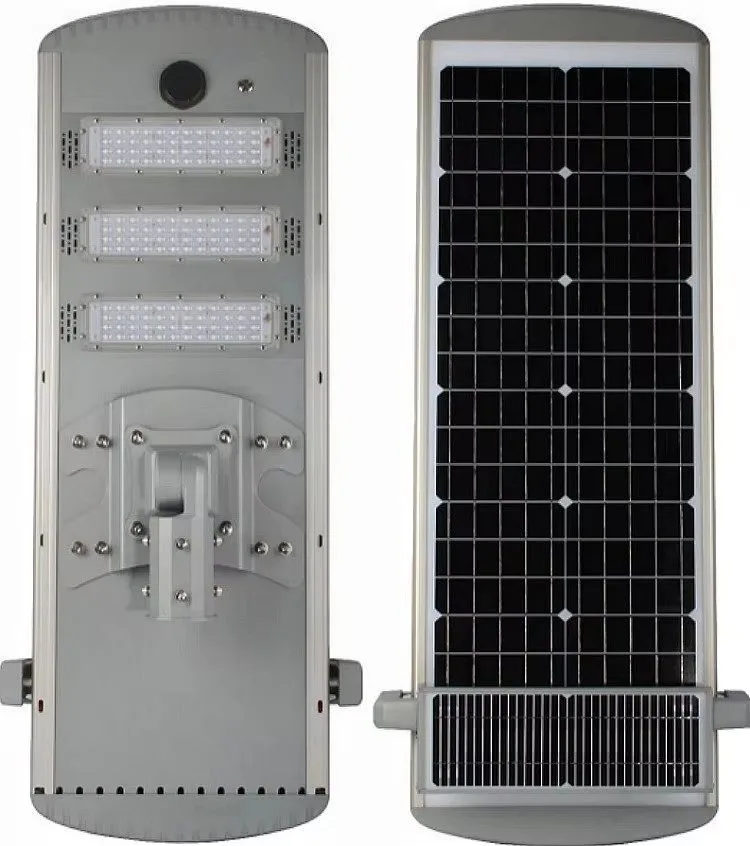
Why Solar Panels Lose Performance in Oil Palm Environments
Solar panels do not fail suddenly. Their performance drops slowly.
In self cleaning streetlight oil palm waste environments, dust mixes with pollen, organic residue, and oil particles. This creates a thin layer on the panel surface. Rain often cannot remove it.
As this layer builds up:
Daily charging goes down
Batteries discharge more deeply
Night lighting becomes less stable
This is why self cleaning street light palm oil projects face long-term reliability issues. Manual cleaning sounds simple, but it is hard to manage at scale. Plantation roads are long. Access is limited. Cleaning schedules are often delayed.
This explains why self cleaning street light palm oil project deployments exist. They deal with contamination inside the system, not through external maintenance.
What Makes a Solar Street Light “Self-Cleaning”
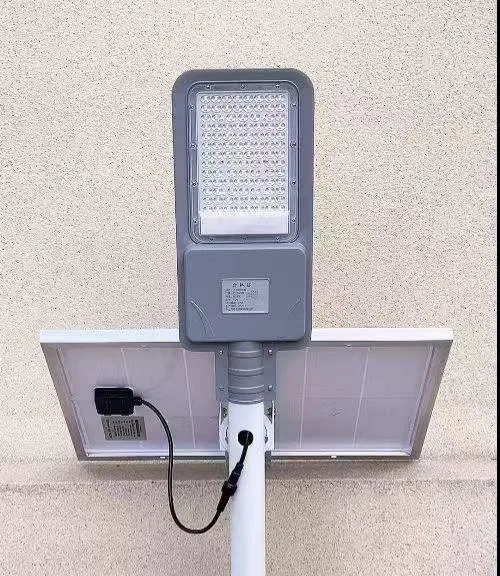
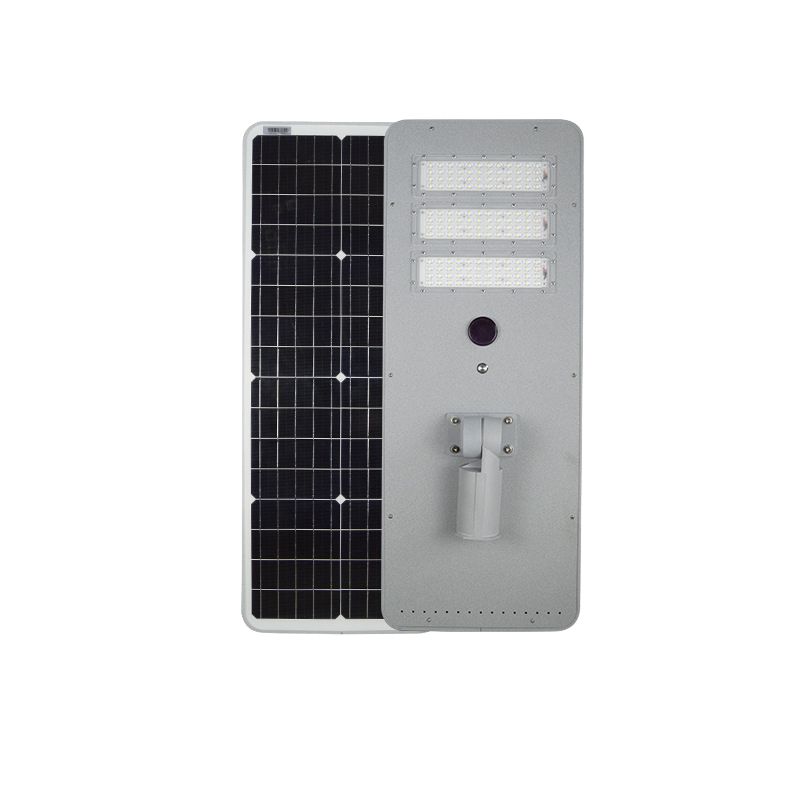
A self-cleaning solar street light is an automatic solar street light with a built-in system that cleans the solar panel by itself.
The system includes:
A standard solar lighting structure
A built-in cleaning mechanism
Control logic for timing and energy use
The goal is not perfect cleanliness. The goal is to prevent long-term energy loss.
In oil palm self-cleaning street lamp project oil palm project deployments, this function keeps energy input stable over months and years. Without active cleaning, dirt returns quickly, even after rain.
Self-cleaning is a system function, not a cosmetic feature.
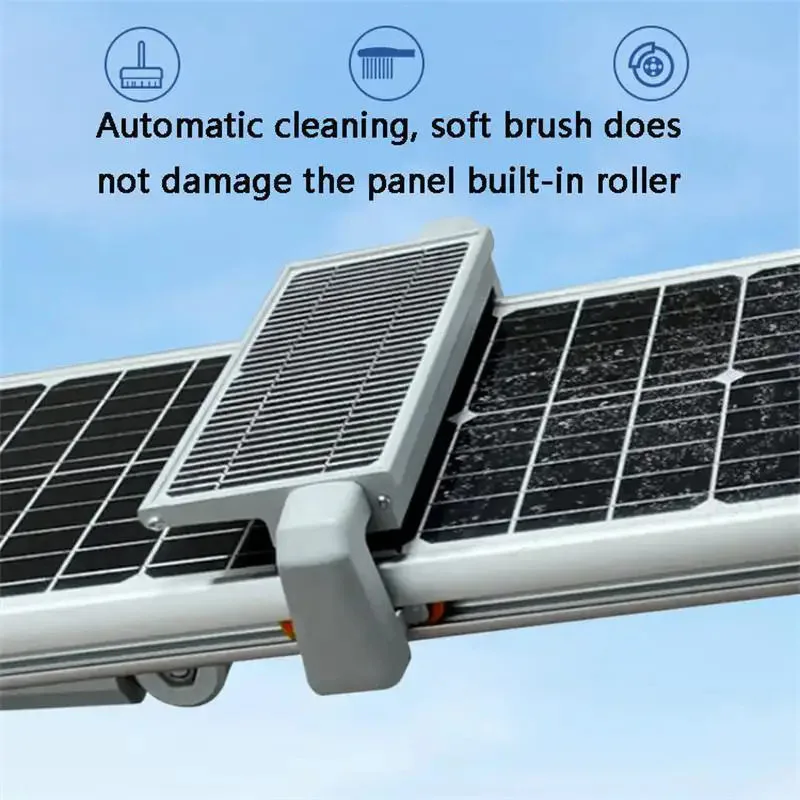
How the Self-Cleaning Mechanism Works in Practice
Most self-cleaning systems use simple mechanical cleaning.
A small motor moves a brush or wiper across the panel surface. This removes loose dust and breaks sticky residue. Cleaning usually happens in the early morning or evening, when solar input is low.
The controller controls:
When cleaning can run
How often cleaning happens
How much battery energy can be used
Good designs use little energy. In most cases, the extra energy gained from a cleaner panel is more than the energy used for cleaning.
This is why self cleaning street lamp research dust resistant lamp project exist. These projects test systems in real dust and waste conditions, not just in labs.
Simple systems often last longer than complex ones in harsh outdoor use.
Why Self-Cleaning Systems Are Used in Oil Palm Projects
Oil palm plantations create difficult operating conditions.
Street lights are often installed along long internal roads. Manual cleaning needs vehicles, workers, and time. In many cases, cleaning is skipped or delayed.
An oil palm self-cleaning street light project reduces this dependence. Each light keeps its own panel clean. Over time, this leads to:
More stable charging
Less battery stress
Fewer maintenance visits
In many oil palm self cleaning street light project oil palm cases, owners find that lifecycle cost matters more than purchase price. Stable lighting is more important than peak brightness.
Self-Cleaning vs Manual and Robotic Cleaning
Manual cleaning has clear limits:
High labor cost
Safety risks
Uneven results
In controlled places, robots are sometimes used. A robot for cleaning lighting fixtures in highway tunnels works well because tunnels are closed and easy to access.
But robots are not suitable for:
Plantation roads
Rural networks
Standalone solar poles
Self-cleaning solar street lights solve cleaning at the fixture level. This makes them better for large, remote, and spread-out projects.
When Self-Cleaning Solar Street Lights Make Sense
Self-cleaning systems are not needed everywhere.
They make sense when:
Dust or organic residue is always present
Rain cannot clean panels well
Manual maintenance is costly or unsafe
Project size increases maintenance risk
They may not be needed in clean cities with easy access.
The key point is simple:
self-cleaning solar street lights are not about adding features. They are about reducing dependence on maintenance.
A Lifecycle View of Solar Street Lighting
Self-cleaning solar street lights solve a real engineering problem.
In oil palm plantations and other dust-heavy areas, contamination limits performance more than hardware quality. Self-cleaning systems protect energy input, keep lighting stable, and reduce long-term risk.
They are not right for every project. But where maintenance is the weakest link, they are practical and effective tools.
FAQ
Do self-cleaning solar street lights really improve lighting performance?
Self-cleaning systems do not increase LED brightness or lumen output. Their impact is indirect.
By reducing panel contamination, they protect daily energy input. This helps batteries charge more consistently, which stabilizes nighttime lighting performance over time. In dust-heavy environments, this often matters more than higher initial brightness.
How much energy does the self-cleaning mechanism consume?
Well-designed self-cleaning systems use very little energy.
Cleaning typically runs once per day or a few times per week, usually during low-solar or low-load periods. In most real projects, the energy gained from a cleaner panel exceeds the energy consumed by the cleaning mechanism.
Are self-cleaning systems reliable in outdoor, harsh environments?
Most systems use simple mechanical designs, such as a motor-driven brush or wiper.
Compared to complex robotic or sensor-heavy solutions, simpler mechanisms tend to be more reliable in dusty, humid, and high-temperature environments like oil palm plantations or rural roads.
Can rain replace the need for self-cleaning?
In clean urban areas, rain may remove loose dust.
In environments with oil mist, pollen, organic waste, or fine particles, rain often leaves residue behind. This thin layer gradually reduces panel efficiency. Self-cleaning systems address contamination that rain alone cannot remove.
When is a self-cleaning solar street light not necessary?
Self-cleaning systems may not be needed where:
Air is clean and dust levels are low
Panels are easy to access for regular manual cleaning
Project scale is small and maintenance is reliable
They are most valuable where maintenance is difficult, delayed, or costly.
Engineering-Oriented, Non-Sales
If your solar street lighting project operates in dusty, agricultural, or industrial environments, panel contamination should be evaluated as a system risk—not a maintenance detail.
Understanding whether self-cleaning makes sense requires looking at:
Site contamination patterns
Maintenance accessibility
Battery stress and lifecycle expectations
If needed, we can help assess whether a self-cleaning solar street light configuration is technically justified for your application, based on operating conditions rather than marketing features.